
Fiat G.50 history
In 1931, at FIAT Aviazione, a second technical design office came into existence, directed by Gabrielli. His first activities were, at Piaggio, producing the all metal version of the S 55. Joining FIAT Aviazione, Gabrielli, with the establishment of a drawing office of his own, was able to develop his own project. The three- engined G 2 of 1932, designed to adapt itself readily to the use of different power units, was followed in 1933 by the G 5, a single engined monoplane equipped with flaps on the landing and trailing edges, and the G 8 biplane in 1934. Next year another civil aircraft followed, the G 18, a twin engined all-metal monoplane in the category of the Douglas DC2/DC 3 and subsequently, in 1936, the G 18 V.
In the April of the same year, Gabrielli drew up plans for his first military fighter, low winged, entirely of metal construction and retracting landing gear. The drawings up was based on the adoption of an 800 H.P. engine, not more than one meter in diameter- an engine which was not yet in existence, but in this moment FIAT were developed similar engine, based on American Pratt&Whitney R-1830. In view of interest which the project of this fighter was capable of offering, FIAT, at the same time, got down to turning out the engine which was apt, developing the A 74, fourteen cylinder radial engine in double row.
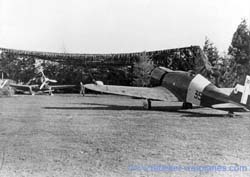 Meanwhile, in July the same year, Ministero dell’ Aeronautica invited the leading Italian companies to draw up plans for new fighter prototypes. Three categories were suggested: defense, fighter and combat, but a compromise answer was held to be preferable, capable that is, of satisfying the demands of different roles. While not being determining factor as regards evaluation, the air cooled radial engine was recommended; the armament had to consist of two 12, 7 mm machine guns, and cannon of 20 or 37 mm. In accordance with these terms and deriving it from the previous designs, Ing. Gabrielli proceeded to a preliminary project of the G 50 fighter aircraft, low winged monoplane, all metal, with retractable undercarriage, fitted with the new A 74 RC 38 engine. The armament was constituted of two Safat 12, 7 mm machine guns, ( one in the fuselage, and the other in the port wing) and of an Oerlikon 20 mm cannon in the starboard wing. Top speed of 460 km/h at 3500 m was estimated. This project, presented in September 1935, was subsequently subject of various modifications and improvements, which considerable altered and improved the pristine line; in the 1935/36 winter, progress was made from the preliminary project to the final design, with the drawing up of working blueprints for the factory. At the start of 1936, with a fresh contest, Ministero dell’ Aeronautica invited various Italian companies to prepare plans for an exclusively defense aligned aircraft, equipped therefore with lighter armament and not requiring the installation of internally carried bomb load.
Since design for the G 50 were in that moment at advanced stage, and the radical transformation would entail a postponement of finalization of more than six months, internal bomb load were refused and in that place were positioned fuel tank and lower side was simply covered by metal plate. In the summer of 1936, the CMASA works of Marina di Pisa started preparing the first example and, going all out, was able to complete it in the early weeks of 1937. For the better rigging out of the prototype, the first cycle of flight tests was arranged for the FIAT Aeritalia airport. In February, the G 50 NC 1 was consequently transferred to Turin, followed by CMASA-s test pilot De Briganti. The NC 1, which meanwhile had received the registration MM 334, affected its maiden flight in the afternoon of the 26. February, remaining airborne for 15 minutes. Soon, the second prototype was joining to the tests.
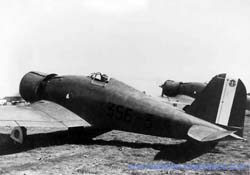 Flights at the Aeritalia air strip were extended over several months, during which the fitting out of the plane was proceeded to, and performances were ascertained. In the summer, the prototype was switched to the Pisa S. Giusto airport, where CMASA had their own airstrip and then to Guidonia.
In the meantime, on the basis of a first outline appraisal, the Ministry had forwarded CMASA the order for a batch of 45 airplanes, but massive production was to await the outcome of comparative tests with the Macchi MC 200. With the introduction of the all metal structure, the monoplane wing, retractable landing gear and new lines, the fighter speed had achieved a decided leap forward, touching 500 km/h in level flight, with the ability to surpass 700 km/h in the dive; a whole range of problems of stability and controllability, of structural vibration, of engine and propeller to strong bursts at high revs. Certain modifications to the tail fin and to the ailerons were worked out, to improve the stability and controllability- improvements which were incorporated into the aircraft intended for the comparative tests. Permanent problem presented vibrations at high revs and speed and from this reasons was lost second prototype (MM 335) at November 8. 1937 at San Giusto airfield, in 15.30, killing test pilot De Briganti. He was replaced by CMASA test pilot Enzio Guerra.
On the February of 1938, while at CMASA the fitting out of the first batch of 45 planes was already at an advanced stage, the appraisal and comparative testes between G 50 and MC 200 began at Guidonia. The different principles according to which the two aircraft had been designed, played a determining role, inevitably: while the Macchi had been developed exclusively in response to the demands of the fighter, pushing performances and manageability to the limit, in the G 50, anticipating it almost a year, and based on the multipurpose conception, the possibility was retained of carrying 600 rounds per weapon, and of installing internally bomb sticks or bomb of various calibers. The armament bay in fact constituted a weighty influence on the fuselage section, both as regards bulk and aerodynamics form; afterwards it was simply closed, since its “doing away with” would have required a more or less total redesigning of the fuselage, and new calculations regarding the entire aircraft. The G 50 moreover, was prepared for the addition of a further fuel tank and the possible addition of a 7, 7 mm caliber machine guns in the wings.
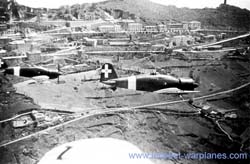 The outcome of the evaluation was favorable to the Macchi MC 200 as far as the various performances were concerned but certain characteristics, such as greater facility of check up’s, inspection and repair and the pilot’s ability to get out with the aircraft turned over, which in the event of military employment, were not negligible, were to be ascribed to the G 50 advantage’s. In effect, with the appraisals brought to a close, the study was requested of only four points in the case of the G 50; open cockpit, mechanical braking device for the undercarriage, self starter system for the engine, and the adoption of oxygen apparatus for great height flights. Initially were planed to manufacture winning C 200 in FIAT plants but thus could delay the productions for up to six months and moreover, for manufacture of Macchi fighter 20000 working hours are required.
Request to alter the cockpit of the G 50 (and similarly that of the MC 200) from closed to open, was no by means a minor modification requirement, representing a serious problem aerodynamically. Cockpit hood was deformed at high speed and presented problem to open and that could be very hazardous for possible rescue of pilot. That was the main reason to open cockpit. It was thus decided to bring out a sample aircraft, modifying a G 50 from pre series and, studying the results, to modify the series, for which the contract was in course of being implemented.
The flight tests of the sample aircraft for the I series (MM 3571) brought to light how many problems derived from to open cockpit, without obtaining results regarding visibility sufficient to justify the shortcomings that resulted from it. Various types of windscreen were tested, to limit aerodynamics disturbance that affected the tail, with consequent vibrations; this without taking into account the diminution of the top speed which was a consequence and the pilot’s discomfort and reduced visibility. In spite of these things, a compromise solution having been found after various experiments, it was adopted for the production of the following series of aircraft. All these tests could not fail to delay its construction and the consignment of modified G 50’s was not able to begun until the autumn of 1939.
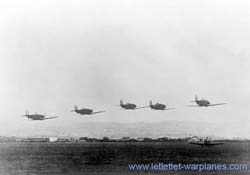 At the beginning of the autumn of 1938 a dozen productions G 50 had been already flight tested and delivered to the first operational unit intended to use in Spain for evaluation in combat conditions. Unit was based on Ciampino and for commander was nominated Major Mario Bonzano, air ace from Spanish war. Interest to send the type in Spain goal back to the 1937, when the nationalist air ace, Joaquin Garcia Morato, was tested prototype at Guidognia airfield.
This unit, denominated Gruppo Sperimentale da Caccia (Experimental Fighters Group) reached the Spanish front in the January 1939, being located at Escalona, and 70 km away from Madrid. The participation of the G 50 in the military operations which brought the war in Spain to a close was not very intense and basically served experimental ends. Most activities present high altitude escort. Some of planes were damaged due to the problem of absence of lock mechanism for landing gear. In May 1939 all G 50 was ceded to the Spanish Air Force. They had served in 27. Gruppo Caza and from 1943 they were in Spanish Morocco, in 2. Regimento Mixto, aside with German He112B.
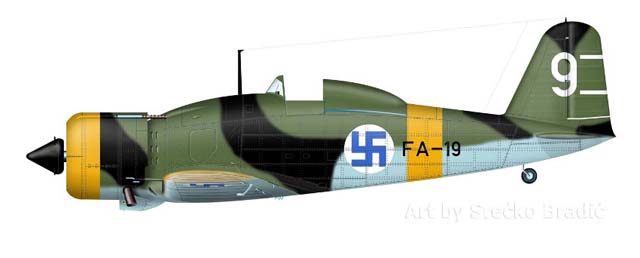
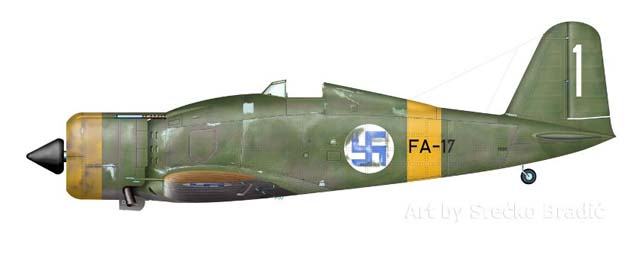
Following contract between the Italian government and that of Finland, concerning the supply to that country of material of war, a group of Finish pilots was seconded to Turin at the end of 1938, to examine the G 50. The evaluation had positive results and in 1939 the agreement was reached whereby 35 planes should be sold to Finland. On account of the cockpit modifications, production was subject to some delay and it was only towards the end of the year that the first G 50’s were sent to Rome, for the military acceptability flights on the part of the Finnish pilots. In November, during one of these test flights, Lt. Tapani Harmaja, affecting a dive from 3500 m, reached speed of 830 km/h, a speed which could be claimed as the highest achieved by an Italian aircraft.
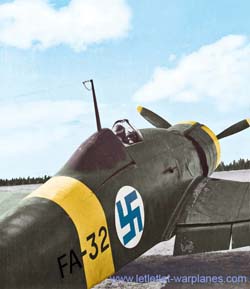
Fourteen G 50 shipped to Finland in the January of 1940 and was assigned to LeLV 26, stationed at Utti, which was able to embark on familiarization flights with the new plane right from the early days of February. The remaining aircraft arrived until the June while two were lost on ferry. The cessation of the war between Russians and Finns caught the unit whilst it was still at the training stage.
The momentary period of tranquility allowed the LeLV 26 to fit out, including with some improvements, “Fiju”, nickname given by Finish pilots, which suffered from extremely harsh Artic temperatures. For example, for certain aircraft a special spinner was fitted, of which the construction was commissioned in Sweden, which was to safeguard the airscrew boss, to protect from freezing of the oil.
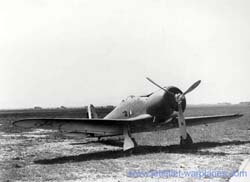 The re-opening of hostilities between Finland and USSR, in June 1941, also involved the G 50, which joined the first line, along with LeLV 26, until the May 1944. The able and aggressive pilots of this unit, succeeded in winning more than few victories in the frequent encounters with the adversary aircraft; Oiva Tuomimen , the first Finn pilot to be decorated, in August 1941, with the “Manerheim Cross” distinguished himself exceptionally. Operationally were used until the 1947 and last survived was scraped in 1956.
Before its collapse in short war, Royal Yugoslavia has brought from Italy some Macchi 200 but they were not delivered. On these base new Croatian state requested from Italy deliver of these planes. In a reason of permanent deserting from the Croatian forces and massive crime against Serbian population, Italian government refuse any delivery. But possibility to get some strategic materials changes this decision but not to Macchi but to less capable G 50, one of these two seat. Delivery was done in Jun 1942.
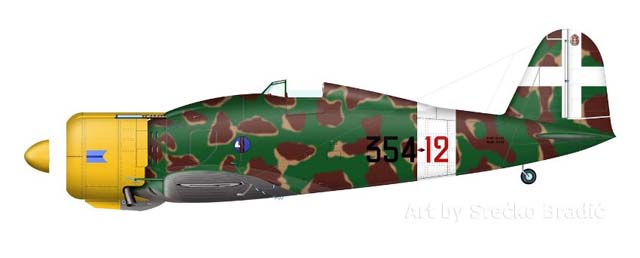
According to the Programma R, program of the strengthening of the Aviation, the G 50ought to have equipped one Stormo and one Gruppo (Stormo-regiment or wing, Gruppo-group). The first unit to receive this plane was the 51. St. C.T. (Caccia Terrestre- land fighter), based at Ciampino Sud, which became operational in the 1939/40 winter. Very soon, unit had it first success on exercise, when they pursuit and catch opposing bomber from 12. Stormo B.T. Unit emblem was three green mouse and new emblem of 51. gruppo became black cat catching three green mice. With the revision of Programma R, the consistency of the unit of G 50’s was increased to two Stormo; thus the 52. Stationed at Pontedera and Sarzana, for the moment, only 22. Gruppo were equipped with G 50’s the 24. Gruppo still with CR 32’s was awaiting replacement.
 In the moment when Italy entered the war, Jun 10. 1940, the two Stormo disposed of 118 G 50 whilst another 30, about, were in course of delivery. First unit to have an action was the 22. Gruppo of Pontedera, carrying out, between 15. and 19. June several missions over Corsica, escorting S. 79’s. At June 16. sergeant Lui Malagoli from 355. squadriglia lost its life above the sea and this is the first combat victim of G 50. The same Gruppo, after having been transferred to the north, from Rome to Genoa and took part in the Alpine sector, in the operations against France. War against France was over at June 24.
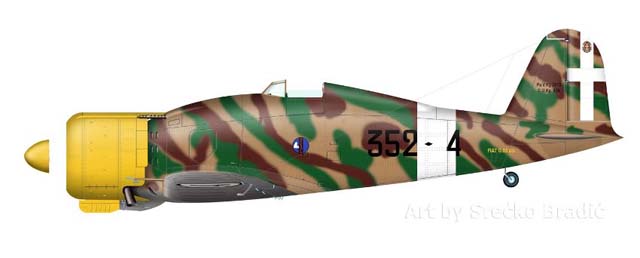
Some after the conclusion of their actions against the France, the Staff ordered the constitution of a Corpo Aereo Italiano (Italian Air Corps), destined to operate, based on Belgium, against England. The 20. Gruppo (G 50) was chosen, led by Mario Bonzano, to form part of the 56. Stormo C.T., which was being set up, detaches it from the 51. Stormo. At the October 19. the G 50’s together with the CR 42’s of the 18. Gruppo, were switched to Belgium, being drawn at the Ursel base. Next day C.A.I. technical services, in collaboration with CMASA’s technicians, started work on fitting armor plates, both in the G. 50’s and in the CR 42’s. Activities begin at October 29. 1940, when the G 50 escort bomber raid on Ramsgate. For the G 50, which was made for the Mediterranean conditions, Belgian theatre was a great shock. Temperature at operation height was down as -50 and instruments, fuel and battery liquid were frozen. Moreover, ARC 1 radio unit was not in radio frequency range with German radio units and the cooperation’s could not be made. In January 1941, 351. return to Italy for reequipping to new bis model and then sent to Africa. Other units, 352. and 353. , remained in Belgium, now within JG.56, and operate alongside with new Bf109F fighters. G. 50 affected 662 sorties but having no encounter with the enemy, they have no aerial victories. Four craft were lost in accidents with a lost of two pilots.
While the G.50 of the 20. Gruppo C.T. were going into action over the channel, another front was opening up- The Greek one. In the October, to accompany Italian offensive, eighty G.50 were available, located with the 24. and the 154. Gruppo in Berat in Albania and with the 2. Gruppo, at Grottaglie, near Bari .For this operations, Italy had almost intact forces as well looses in the France and Belgium was minimal. Greece was first serious Italian operation but the Italian staff does not take any special attention and preparation for operation was done in only two weeks. Attack begins at October 28. but Greeks stopped attack after four day’s and went in the successful counter strike. After the first week’s, during which the unit’s were employed almost exclusively for support of ground forces and flying low level and low speed was a critical to the G 50 which had a tendency to stall. Weather conditions were not good, as well of 176 days of operations only 86 was good for flying. That was used by RAF, which crew was at high training level and took many action at night or bad weather conditions. G 50 had high score action with attack on Paramitia airfield at March 22. 1941.
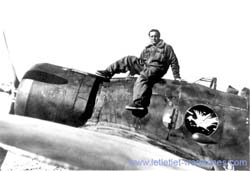 The G.50 thus often found them involved with RAF Gladiator and at times also with Hurricane’s. Especially with the Gladiator, G.50, thanks to its greater speed, could easily enough impose a pattern to their liking on the skirmishes, according to the tactic which was most congenial to them. Also the behavior of the machine in the adverse winter environment, more than came up to expectations.
Reports of the unit commanding officer’s are in agreement that after a brief period of operative acclimatizing, pilots were at their ease with the G.50. The one and only inconvenient factor was a certain hardness regarding to the controls, which made it unadvisable to go in for maneuvered combat, in which Gladiator would have had advantage. At the April 6. 1941 start campaign against Yugoslavia, where the G 50 had several escort sorties.
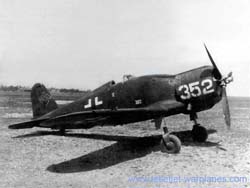 Towards the end of 1939 it was decided, in accordance with the ministry, to affect a series of modifications on the G.50, to improve certain characteristics. The principal variations were to partially redesign fuselage, rendering retractable tail wheel and to increase fuel volume from 316 to 419 liter. In the summer of 1940, CMASA completed the production of 244 G.50 and proceeded to modify tooling in order to adopt it new shape G.50, marked “bis”. In the same time FIAT Aeritalia had received an order for 315 G.50bis and rapidly set up a production line for the new model.
The first flights took place in the period September to November 1940 and served for various fitting to the craft. A slight delay in the delivery of the first production samples was caused by necessity for introducing certain devices to obviate the harmful effects caused by the use in the desert North African theatres. In fact, a progressive series of inefficiencies due to sand came to light, with the units which operated in Africa. At the beginning of 1941, both CMASA and FIAT Aeritalia started delivery of G.50 bis AS to the units in Africa.
 During the operations in Greece was opened African theatre. In December 1941 there were placed 358. sq., 2. Gruppo and 155. Gruppo with total of 76 G 50. Problem which was not timely considered were sand and importance to equip the planes with filters. That was soon solved but due to the dust problems only a handful of G 50 was in flying conditions during the British offensive in February. But the worst problem presented Ally fighters which was too heavy match and most of them being Hurricanes and P-40. Besides convoy escort missions, the G.50 took part in the various offensives and counter offensives which developed, operating both as a fighter as well support mission. For that purpose, bomb racks were installed beneath the wings, in 1942. By the end of 1941 there arrive famous 20. Gruppo but unit suffered heavy losses at 19. November 1941, when British armor unit “Queens Own Hussars” attack their airfield and destroy 18 planes on ground. After El Alamein offensive only 368. Squadriglia assalto operated G 50 in the theatre. Units were based at Sfax under the command of the captain Ferrero. The war in Africa having been brought to close with the loss of Tunisia, the subsequent phase was the Sicily landing. Among the units which took part in these actions were 158. and 159. Gruppo Assalto. Due to the Ally air superiority and effective naval anti aircraft fire these units were disintegrated in just a few days.
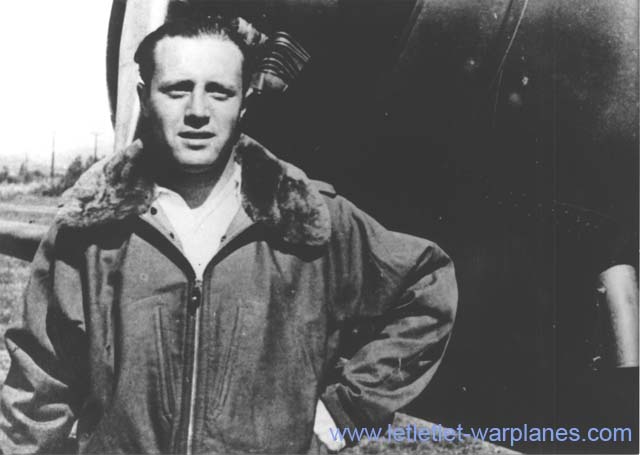
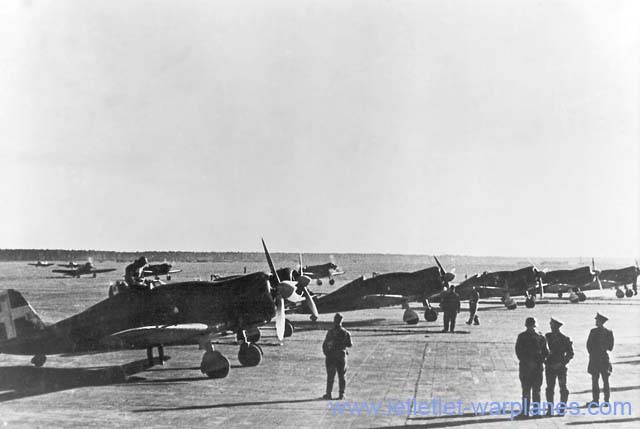

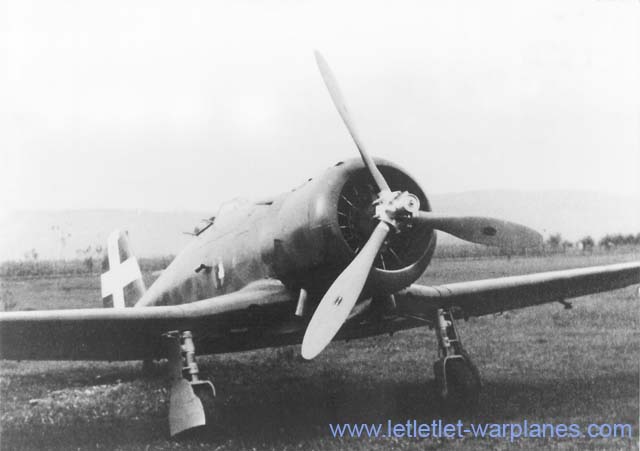

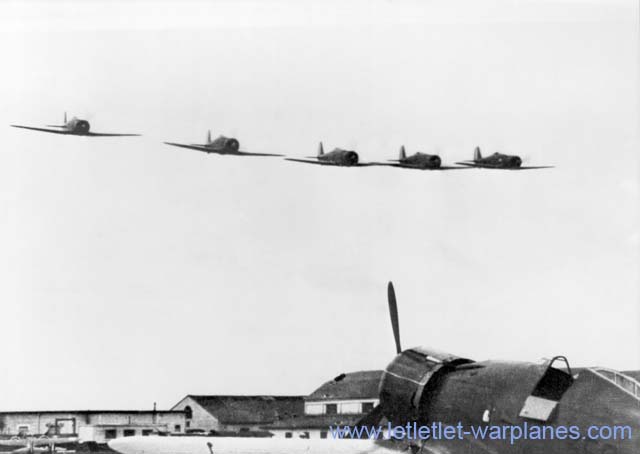
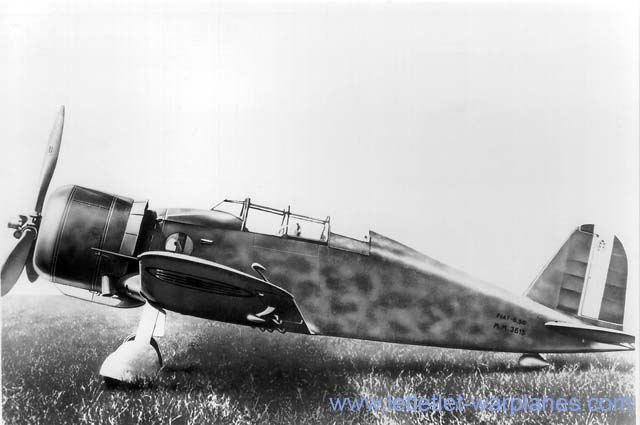
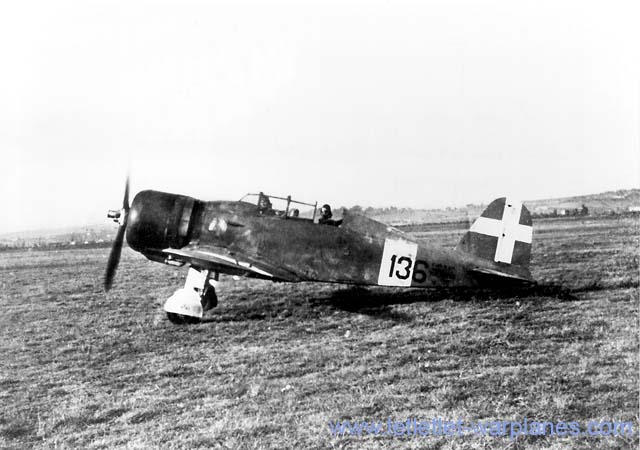


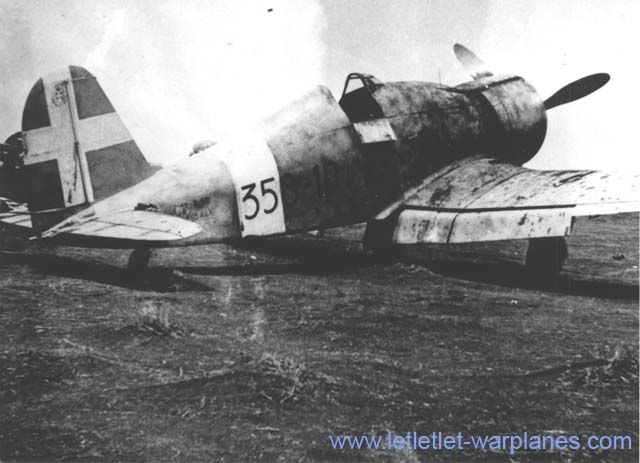

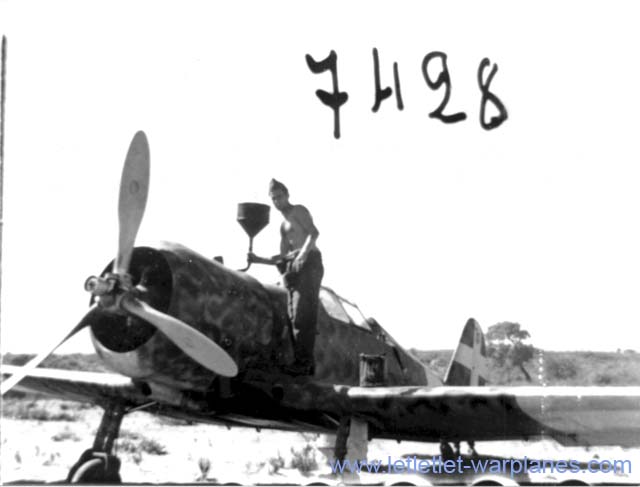
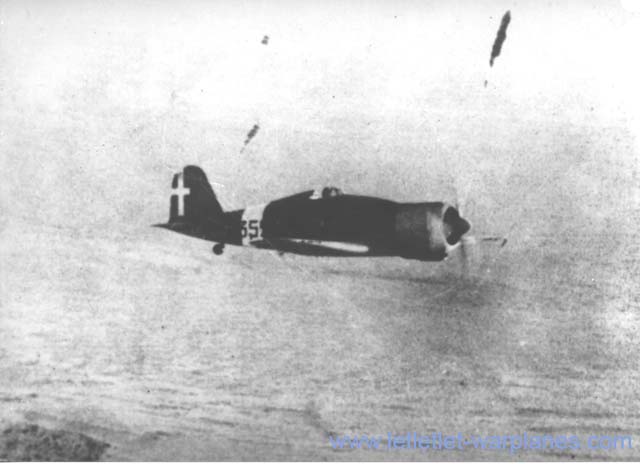
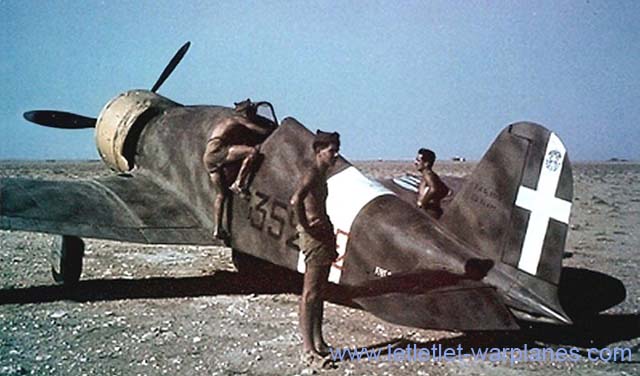
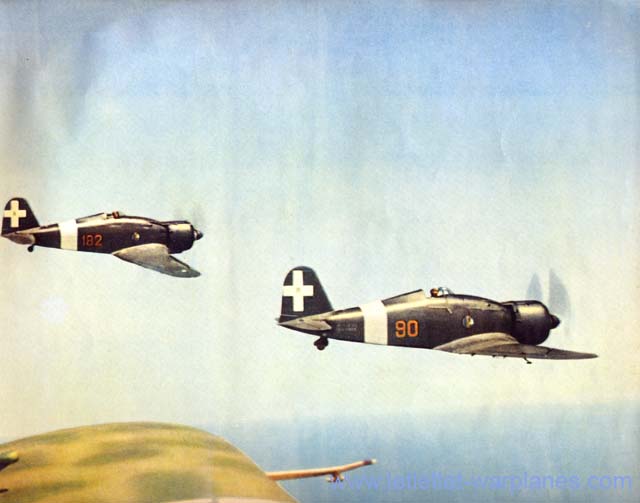
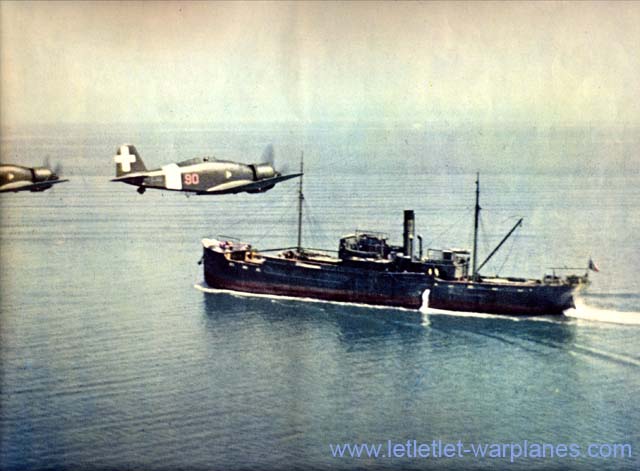
On the September 8. 1943, at the moment of the Armistice, there were 47 G.50 remained in Italy and Mediterranean area and only 17 were operational. The few remaining G.50 were used in North Italy and they were concentrated at Malpensa, mostly used for training of the pilot’s of R.S.I. (Republica Sociale Italiana). One sample of G.50 B was used as a trainer until the end of forties and then was scraped.
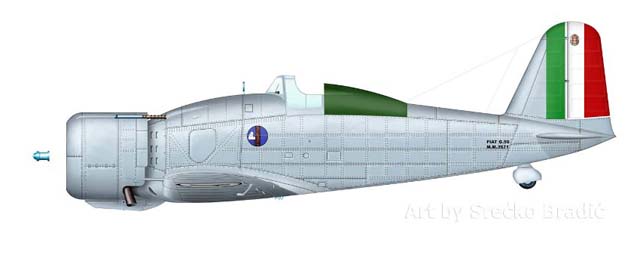
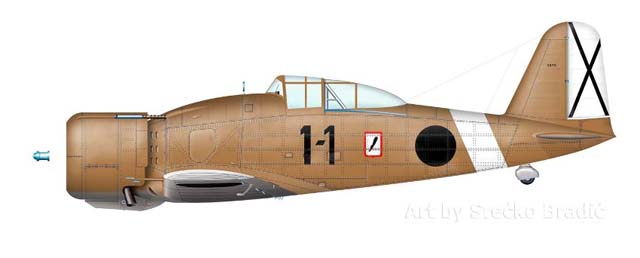
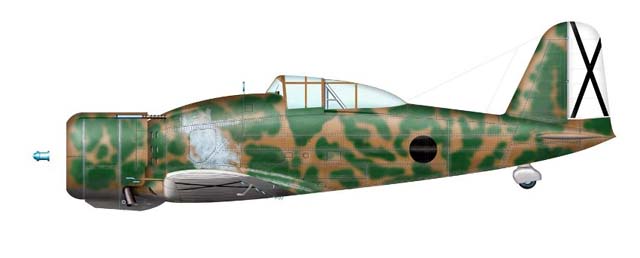



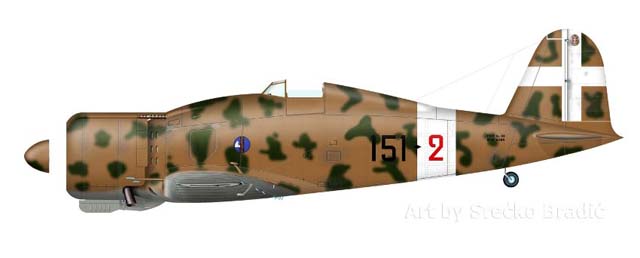
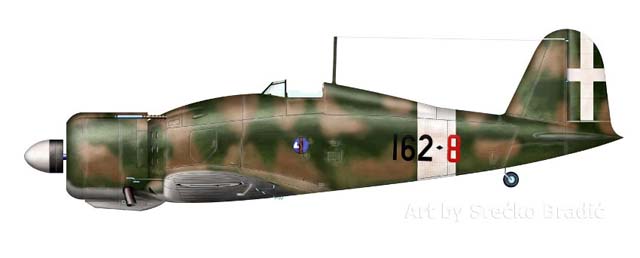

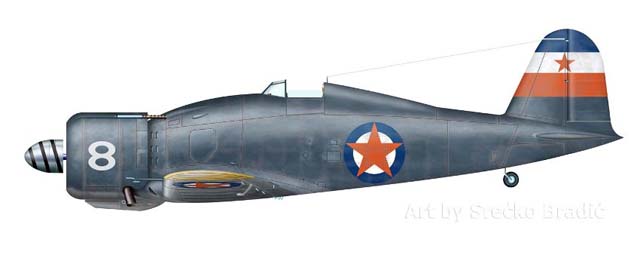
With instance of previously mentioned versions, there are a number of other versions of G.50, some were only built as a prototypes and the other doesn’t move from the drawing board. The urgent need for a trainer with the right features for offering a phased change-over from biplanes of the CR 30/32 types to the new fighter monoplanes made it advisable to develop a two seat version of the G.50. In 1938 at CMASA, who had been assigned to the construction of the G 50 B, a mock-up took shape therefore which, like the single seater, had open back cockpit. After the customary evaluation tests and those for final out, occupying partly at the CMASA air strip at Pisa S. Giusto and partly at Guidognia, the first production G 50 B’s were handed over to the Gorizia and Castiglion de’l Lago fighter training schools. Turn out, which in 1940 had been of a dozen or so machines, went up to the region of the eighty the following year. Some examples continued to be built in 1942 and 1943 to aggregate of 108 planes. In 1944 a number of G 50 B remained in the northern Italy were taken in hand and ravished, being intended subsequently for fighter training units of the R.S.I.
The B model was modified into various versions, some built and the others remaining on the drawing board. The main one present converting the G 50 B into a two seat mono controlled reconnaissance plane. In the aft cockpit a glazed panel was inserted underfoot and there were long focus camera installed. From this “Ricignizione” was derived version for deck operations, for the Italian never operational aircraft carrier “Acquila”. The new details were arrestor hook and two machine guns in wings. Data for B is as follow: wing span 11 m, length 8,03 m, height 2,8 m, wing area 18,25 sq.m., empty weight 1940 kg, take off weight 2340, top speed 456 km/h, top ceiling 9100 m, and range 645 km.
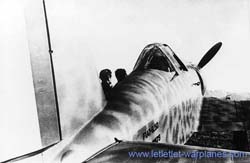 With the intention of increasing armament power of the G 50 bis for ground attack actions, in the spring of 1942 were asked to drawn up plans for arranging wings two 12,7 mm machine guns. The prototype was made by converting of G 50 bis MM 8595. The solutions remained at experimental stage. The plane were marked G 50 bis A.
G 50 ter was intention to adopt new powerplant A 76 RC 40, which developed 986 H.P. Various modifications were done on the prototype’s undercarriage and wings. Basic idea was to install two 20 mm cannons in wings. First flight was in July 17, 1941 but the project was abandoned in reward to the incoming G 55. Technical data: length 8,19 m, height 2,88 m, empty weight 2104 kg, take off weight 2704 kg, top speed 530 km/h, top ceiling 10000 m and range 1000 km.
The G 50 V, MM 479, was completed in summer 1941 in CMASA workshop. Idea was to adopt in line DB engine as a powerplant. Prototype performed 580 km/h level flight but as well with ter model, project was rejected in reward to G 55. Except of above mentioned versions, there were more versions of the plane: G 50 seaplane, G 50 bis N for aircraft carrier (example built), G 50 bis dive bomber, G 50 bis night fighter, G 51 twin engine fighter, G 52 fighter and G 53 two seat reconnaissance with DB601 engine.
Srecko Bradic
Photos- SMA, D’Amico-Valentini and Kari Stenman Color profiles- Srecko Bradic
References:
“Fighters 1939-1945″, Kenneth Munson, Blanford color series “Fiat G.50″, Kalevi Keskinen, Kari Stenman, Klaus Niska, Suomen Illmavoimen Historia “Savremeni Ikari”, Ilustrovana istorija vazduhoplovstva “Avioni”, Alfa 1977 “Regia Aeronautica Vol.1″, Signal Squadron Publication “The Fiat G.50″, profile publication “Aerofan 1/84″ “Warplanes of WW2″, William Green Technical manual C.A. 381 of the Ministrodell Aeronautica from 25.5.1940 for Fiat G.50 Series 2 C.M.A.S.A. Copy of original factory drawings of Fiat G.50bis in 1/5 scale Archive SMA Authors personal research Author grant special thank to following person or organization for their invaluable help: Mario Bartolli Frederico D’i Amico colonelo Aveta Pasquale GAVS Roma GAVS Torino
im search everthing about fiat,and most airplanes and military,i like fiat a lot,i live belgium
Hi
I’m starting my Fiat G50 section will include a link to your site.
Love if you could do the same and have to share photo’s.
Matthew
It is interresting to note that just before WWII when desperately searching for new aircrafts, a Belgian military mission go to Italy trying to buy some Fiats G50, but the Italian Governement proposed instead the Fiat CR 42…