SAAB 35 Draken
To defend its neutrality during the second world war, Sweden faced the problem that they could not easily order fighters from other countries. In the U.S.A. they had ordered a number of modern Consolidated Vultee Model 48 fighters. However, the United States placed an export ban on these planes. As a result Sweden had to develop their own fighter. Fitted with a copied Pratt & Whitney Twin Wasp and being of mixed construction, this fighter was finally operational in 1943 as the J22. After the war Sweden produced for its own air force the twin-boom J21A that flew in its earlier form with a piston engine driving a pusher propeller. Later, the same design was fitted with a jet engine as the J21R. A more important step into Swedish fighter development was made with the J29 Tunnan and the J32 Lansen. Both jet planes were of excellent quality and served in the Swedish air force for many years. At the early fifties the Swedish government started with the development of a supersonic interceptor to defend its territory against invading formations of jet bombers. This would result into one of the best performing jet planes of its time: the SAAB J35 Draken (dragon).
Design:
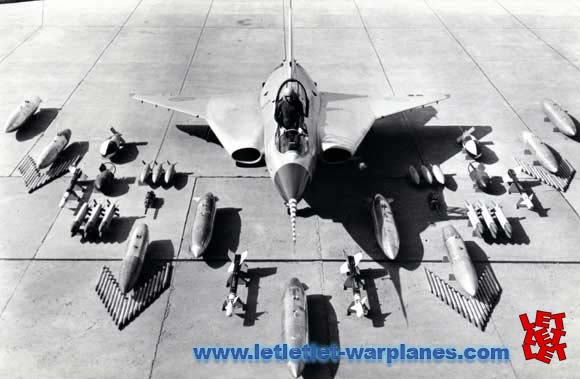
 Most important factor for the design of a new fighter was its role of defending the Swedish borders against enemy air attacks. In that period ‘enemy’ definitely meant Russia! So, the new jet plane’s first task was interception of invading bombers. For this interceptor role, climbing and maximum speed was the most important. That also implied the new fighter had to be a lightweight! Another requirement was a short start and landing distance with the possibility to use motorways. As configuration for the new fighter project, a unique wing configuration was selected; the ‘double delta’ that gave the Draken its very characteristic look. For in-flight testing a 7/10 scale flying model was built, the Model 210, that was appropriately named ‘Lilldraken’ (little dragon).
Flight testing:
The SAAB 210 made its first flight on 21 January 1952 with SAAB chief test pilot Bengt Olow. It was powered by an Armstrong Siddeley Adder jet engine of 477 kg thrust and could reach a maximum speed of 545 km/h at 2000 m. Initially it flew with a nose-mounted split air intake, but later this was changed into the wing root intakes that were eventually also used on the final Draken. The Lilldraken was fitted with a brake parachute and a special system with trim tanks to test various centre of gravity positions. In total it made some 1000 test flights before it was retired from flying status. The SAAB 210 can still be seen in the Swedish air force museum.
For the final Draken, Sweden selected the Rolls Royce Avon fitted with an afterburner as a power plant. Initially the task of the Draken was the interception of bombers flying with trans-sonic speeds. That implied that the Draken had to have supersonic speed capabilities. Initially the fighter’s desired speed was set at Mach 1.2-1.5, although it would finally be capable of flying at twice the speed of sound in its later versions. Work on the Draken was started end 1951. In March 1952 a mock-up was built for inspection by Swedish air force officers. This was followed in August 1953 by a contract for three J-35 prototypes and another three pre-production J-35A’s. At the same time, a revised nose section for a two-seat trainer version was ordered.
The J-35 took off for its first flight on 25 October 1955 piloted by Bengt Olow. The second prototype followed in January 1956 with the third following a month later. The first fully armed pre-production J-35A made its first flight in February 1958 fitted with a more powerful afterburner of Swedish design. In general test flying went well and the new fighter not only showed a phenomenal rate of climb, but also a very high manoeuvrability!


Production for Sweden:
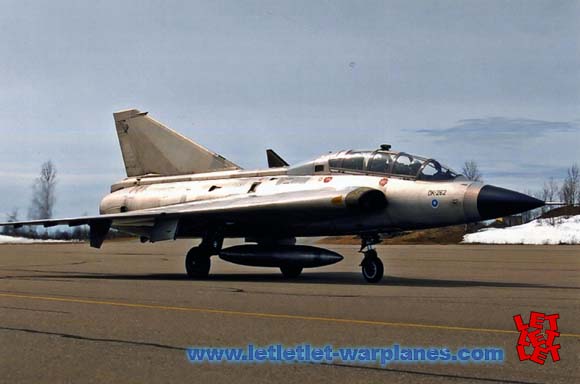
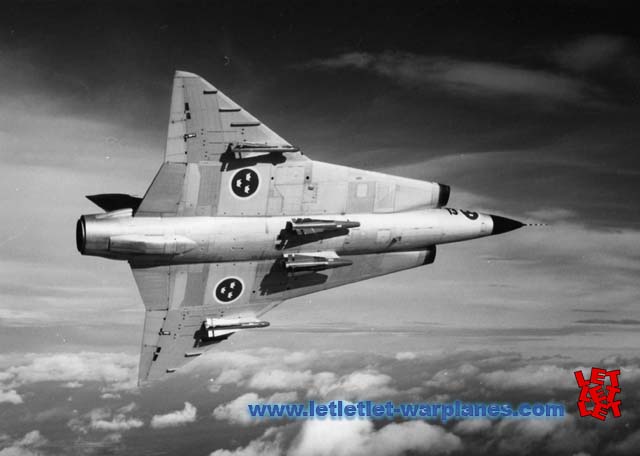
The first production J-35A production machines, ordered in August 1956, were supplied at the end of 1959. This early version could reach a speed of Mach 1.8. It was armed with two 30 mm cannons in the inner wing sections. Further, it could carry two to four Sidewinder air-to-air missiles. The following version, the J-35B, had a slightly longer rear fuselage and a more up-to-data avionics. Special versions of the Draken were a two-seat unarmed trainer and reconnaissance plane. A further improved version built in quite large numbers was the J-35D fitted with Hughes falcon air-to-air missiles and Ericson fire-control equipment. The Draken stayed in operational service until it was replaced by the SAAB Viggen in the mid-seventies.

Exports:
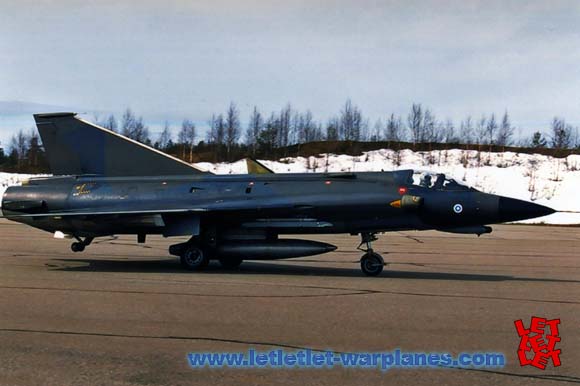
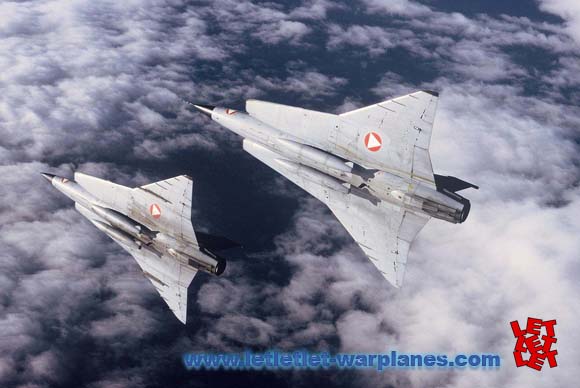
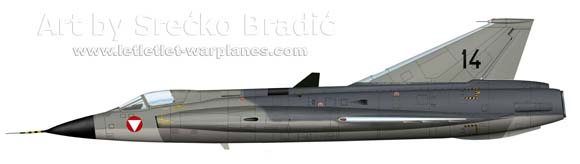
Sweden obtained export orders for their neighbouring countries Finland and Denmark, who received versions adapted to their special wishes, A third country ordering the Draken was Austria. SAAB also made a special designed version for Switzerland, but finally the Swiss authorities selected the Dassault Mirage III.
The Draken was also in the ‘race’ for a new NATO fighter to replace existing subsonic types like the Hawker Hunter and the North American Sabre. With its potential Mach 2 capacity it scored well against its competitors. Most important competing types for this ‘deal of the century’ were the Dassault Mirage, the English Electric Lightning, and the Lockheed F-104 Starfighter. Unlucky for Sweden. the Draken was not the right ‘political’ choice!
It is interesting to note that the Draken was also used in the United States by the National Test Pilot School (NTPS). They used six Drakens which were purchased from the Danish air force. The US Drakens were based at Mojave Spaceport and carried civil registrations.

Phase out:
Swedish air force Drakens were gradually phased out in the seventies and replaced by the Viggen, although some of them kept flying until the nineties.. The Danish Drakens were retired in the nineties. Also the Finnish Drakens served some years longer than in Sweden with their final retirement in 2000. The Austian air force Drakens served the longest with their phase out in 2005!

Model kits:
Just to keep it short:
Several good quality kits at 1/72 and 1/48 scale are available from Hasegawa, Revell and Airfix.
See the following links for more details!
http://www.geocities.com/CapeCanaveral/Hangar/7252/j35.htm
http://www.modelingmadness.com/scotts/mod/previews/hasegawa/09817.htm
http://www.ipmsusa2.org/Reviews/Kits/Aircraft/hasegawa_48_draken/hasegawa_48_draken.htm
Heller had in the past at 1/72 scale a model of the Draken, that is maybe still available on aviation fairs and air shows.
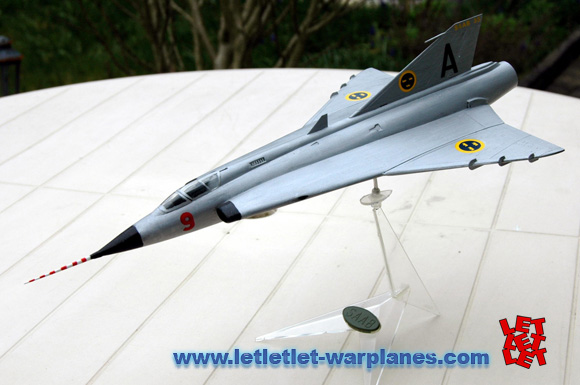
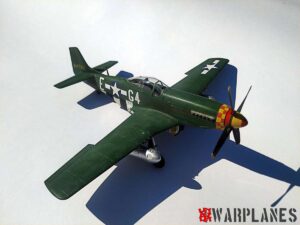
The US Lindberg had many years ago a 1/48 scale kit of a not all too accurate early Draken version which must now be regarded as a collector’s item! (see photo of finished model).
Versions:
SAAB 210: Lilldraken ;7/10-scale proof-of-concept model; 1 built in 2 versions
SAAB J 35: three prototypes without afterburner
SAAB J 35A 1st production model for Swedish AF; 90 built
SAAB J 35B improved version with longer tail cone; 73 built
SAAB Sk 35C dual-seat trainer version; 25 built. Three sold to Finland as surplus machines
SAAB J 35D version with enhanced performances; 92 built
SAAB J 35E reconnaissance version; 60 built
SAAB J 35F improved version with more powerful engine and new fire control system; 230 built
SAAB J 35J upgraded version of the J 35F; 66 converted from F version
SAAB J 35H export version for Switzerland (Helvetia); none built
SAAB A 35 XD export version for Denmark based on J 35F; 20 built
SAAB J 35 XD second batch for Denmark as reconnaissance plane; 20 built
SAAB Sk 35 XD two-seat version for Denmark; 11 built
SAAB J 35 BS export version for Finland based on J 35B; 12 supplied
SAAB J 35 CS export version of Sk 35C for Finland; 5 supplied from surplus Swedish AF stock
SAAB J 35 FS export version for Finland based on J 35F; 24 supplied
SAAB J 35 Ö export version for Austria based on J35D; 24 supplied
SAAB J 35 XS last export version for Finland based on J 35F; 12 built by Valmet
In total, 644 Drakens were built of all versions.
Nico Braas
References:
-World Air Power Journal Vol. 17 Summer 1994 P.116-135-SAAB Sonics 1955-1961
-The SAAB story by Bo Widfeldt (re-print from Air Pictorial)
Websites:
http://en.wikipedia.org/wiki/Saab_35_Drakenhttp://www.canit.se/~griffon/aviation/text/35draken.htm
http://fly.to/draken/
http://www.vectorsite.net/avj35.html
http://www.warbirdalley.com/draken.htm
http://www.doppeladler.com/oebh/luftfahrzeuge/draken.htm