
German flying boats Part 1: 1914-1935
German aircraft manufacturers have always been on the lead of new developments since the birth of aviation. They already used reliable and seaworthy seaplanes during the First World War. In their operations over the North Sea area they were in most cases superior in agility and speed when compared with their slow an sluggish seaplane counterparts from the UK. In this part, a complete overview of ALL German flying boats will not be given. However, the most important types from the WW-I up to 1935 will be described. In Part 2, the German flying boats built from 1935 up to the present will be reviewed.
Dornier RS.IIB
Based on an earlier RS I ‘Riesenflugboot (giant flying boat) of 1915, a type that was already destroyed in a storm before its first flight, the famous German aircraft designer Claudius Dornier built a somewhat smaller follow-on type as the RS-II. Like its predecessor, it was largely made of metal in biplane configuration. The first one built, know as RS.IIA, had some shortcomings that were corrected in the improved type RS.IIB. First flight took place on 6 November 1916, but eventually the German Navy never accepted it and later it was dismantled and scrapped.
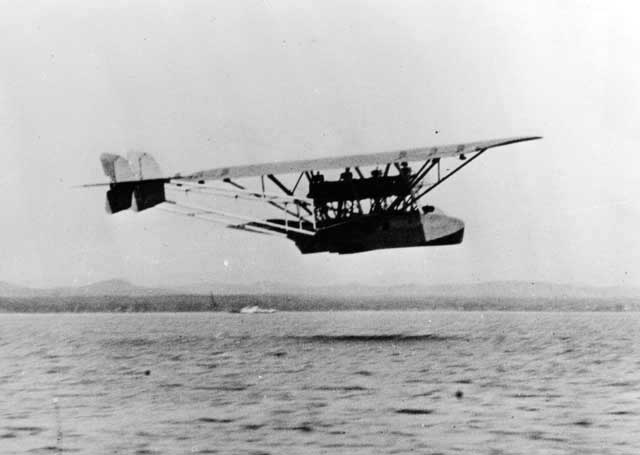
Technical details:
Engines: 4 Maybach HS engines of 240 hp each
Wing span: 33.2 m
Length: 23.9 m
Height: 7.6 m
Max. speed: 128 km/h
Service ceiling: 3000 m
All-up weight: 9158 kg
Dornier RS.IV
After building the RS.III, a flying boat with high-wing configuration of which only one was built, Dornier built a successor with a similar high-wing layout as the RS.IV. The RS.IV was an all-metal aircraft wing fabric covered wings. New on this type were two fuselage-mounted sponsons to improve water stability during start and landing. Later, these sponsons would be fitted to most Dornier flying boats. Fitted with four Maybach engines placed in tandem under the wing, it made its first flight on 12 October 1919. In June of the same year, it was converted for civil use with capacity for six passengers, but on order of the Allies it was dismantled in 1920.
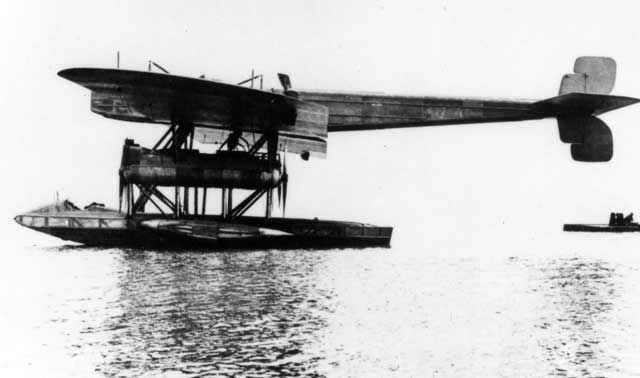
Technical details:
Engines: 4 Maybach Mb IVA engines of 240 hp each
Wing span: 37.0 m
Length: 22.8 m
Height: 8.4 m
Max. speed: 138 km/h
Service ceiling: 2000 m
All-up weight: 10 600 kg
Dornier GS.1
Being, just like its predecessors, an all-metal construction with fabric-covered wings the Dornier Gs 1 was a modern looking high-wing commercial flying boat with a capacity of six passengers. With its tandem-mounted engines it was the direct forerunner of the famous Dornier Wal series. The Gs I made its first flight on 31 July 1919 and was test flown with the Swiss airline company Ad Astra. It was demonstrated in the Netherlands, but finally its crew deliberately sank it because the Allied Armistice Committee wanted to confiscate the plane.
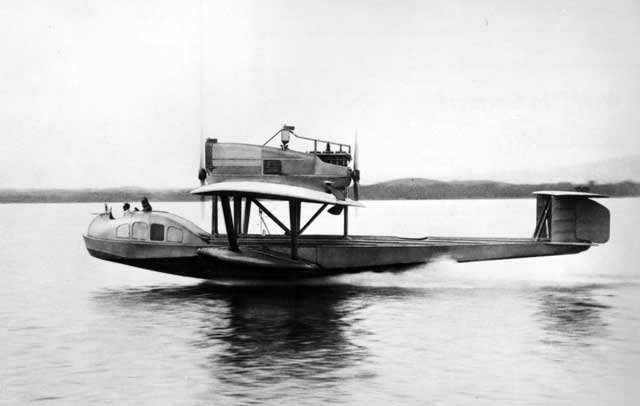
Technical details:
Engines: 2 Maybach Mb IVA engines of 270 hp each
Wing span: 21.0 m
Length: 15.3 m
Height: 4.7 m
Max. speed: 170 km/h
Service ceiling: 4250 m
All-up weight: 4315 kg
Dornier Delphin
In 1920 Dornier introduced a very modern and revolutionary small commercial flying boat as the Delphin I. It was an all-metal high-wing construction, with a single engine in front of the hull. The crew was positioned in an open cockpit directly after the engine while the passengers were seated in a closed cabin with large side windows. It had capacity for 4-5 passengers. The Delphin I was flown for the first time on 24 November 1920. In its original form with a blunt-nosed hull it had great difficulties becoming airborne. By extending the bow, this was later solved. Only four Delphin I’s were built including one to the U.S. Navy for testing its all-metal construction. Another one was sold to Kawasaki in Japan for licence construction.
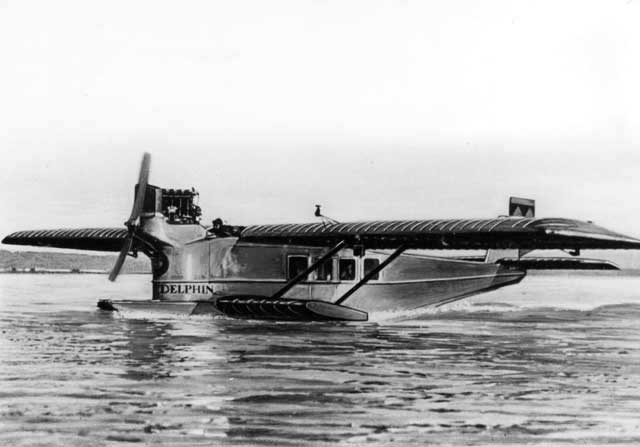
In short, the Delphin was not quite so successful as the later Wal, but also this type was developed further. In 1924 Dornier introduced an improved version as the Delphin II with a more powerful engine and an enclosed crew cabin. Only four were built. One was delivered to the British Air Ministry for evaluation trials and the Deutsche Aero Lloyd for pleasure flights used two others over the Boden lake. Later, Deutsche Aero Lloyd used one of these for testing of a regular nightline between Stetin and Copenhagen-Denmark.
Four years later, in 1928, Dornier launched another improved and enlarged version as the Delphin III fitted with a 400 and later even a 600 hp powerplant and a capacity of up to ten passengers. Again, it was not the big commercial success as expected and only three were built in the new Dornier works at Altenrhein in Switzerland. They were used by Bodensee Aero Lloyd for pleasure flying.
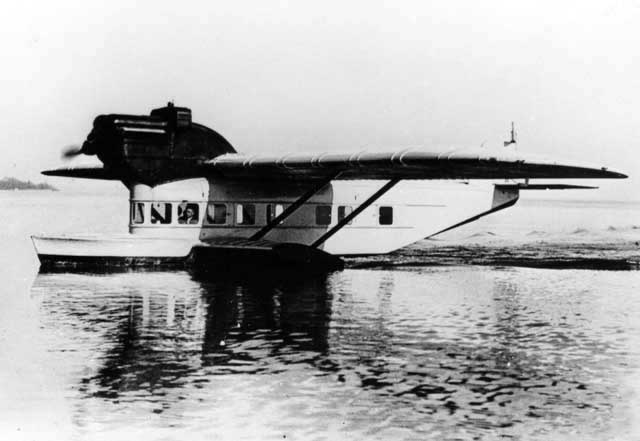
Technical details Delphin I:
Engines: BMW IIIA liquid-cooled engine of 185 hp
Wing span: 17.10 m
Length: 11.50 m
Height: 3.10 m
Max. speed: 125 km/h
Service ceiling: 4000 m
All-up weight: 2200 kg
Dornier Wal
Dornier developed the GS I of 1919 further into a military patrol flying boat for export purposes since Germany was not allowed to have such heavy types of military planes. Since it was forbidden to set op production in Germany an Italian company was established: the Construzioni Mechanichi Aeronautice SA. CMA was located in Marina di Pisa where construction of the new flying boat was soon started. It was called the Wal (whale) and made its first flight on 6 November 1922. It was a great success and many were delivered to Spain, the Netherlands, Chile, Argentina, Japan, Russia and Yugoslavia. It was also licence-constructed in Spain, the Netherlands and Japan. The Wal showed its excellent performance by setting numerous world records! It was also found to be very reliable and easy to maintain and since the hull section was divided in several parts, it was practically unsinkable. Another characteristic of the Wal was that in case of engine failure at sea, the crew could raise a large sail. Although the first Wals were fitted with the same type of Maybach engines as used on the GS I, it could be easily adapted for other engine types and in general it was up to the customer to decide which type of engines he wanted. Except for the Maybach, also the Rolls Royce Eagle, Lorraine Dietrich, Napier Lion, Bristol Jupiter and Isotta Fraschini Asso were used. Some types were even fitted with 600 hp US Liberty engines.
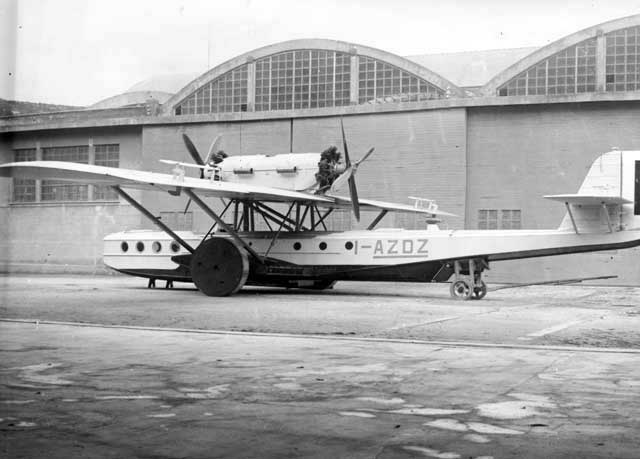
The earlier Wal model could be easily distinguished by its rectangular size large rudder. This Wal was known as version one (‘1.Version’ in German). An improved next version with a larger vertical tail with a smaller rounded-off rudder and more powerful engines was known as ‘2. Version’ . This was the version as used, amongst other, by the Dutch navy MLD. Also the Sowjet navy purchased in 1926 a total of twenty of this improved second version of the military Wal fitted with two Lorraine-Dietrich engines of 450 hp. Later versions for the Sowjet navy were powered by 600 hp BMW-VI engines. In 1933 it was also put into service at the Luftwaffe as the Do-15 at the 2./KüFlGr 106 until it was replaced by the Do-18.
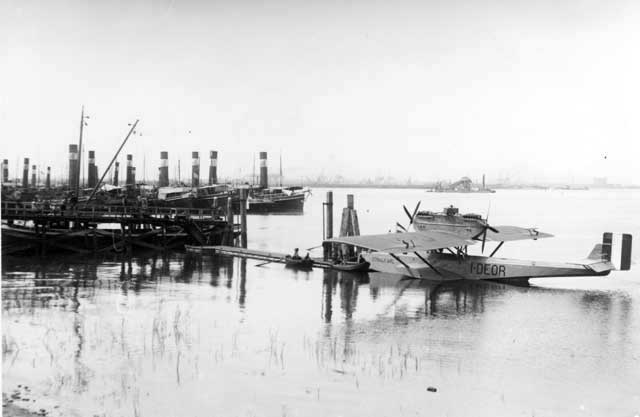
Based on the military Wal, Dornier introduced in 1924 a civil version fitted with large-size windows in the front part of the hull. With a capacity of up to 9 passengers it was used on several airlines in and outside Europe. As with the military Wal, also here two versions were built with the 2nd version fitted with much more powerful engines. Also the civil Wal was licence-constructed, this time in Japan.
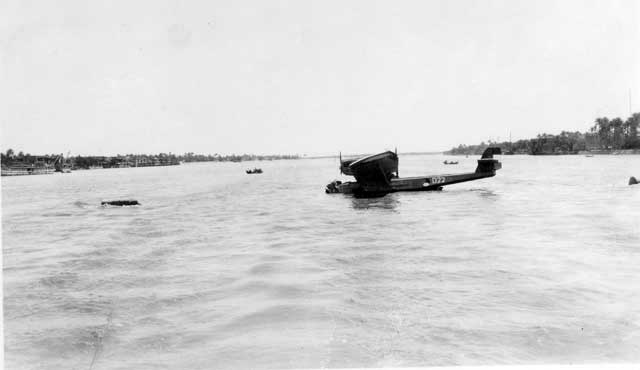
This still was not the end of the Wal development. In 1933 a heavier version with an enlarged wing was introduced as the ‘8-ton Wal’ for use by the Deutsche Lufthansa DLH. The 8t-Wal was later supplemented by an even heavier version known as the 10-ton Wal. They were used as trans-ocean mail and passenger plane and were fitted with a strengthened hull for catapult starts from commercial German ships. Although initially only mail was transported, Deutsche Lufhansa succeeded to establish a regular airline service with the 10t-Wal. The 10t-Wals in DLH service carried the name of winds like Passat, Taifun, Tornado, Boreas and Monsun. They were used until the mid-thirties when they were replaced by the more modern Do-18.
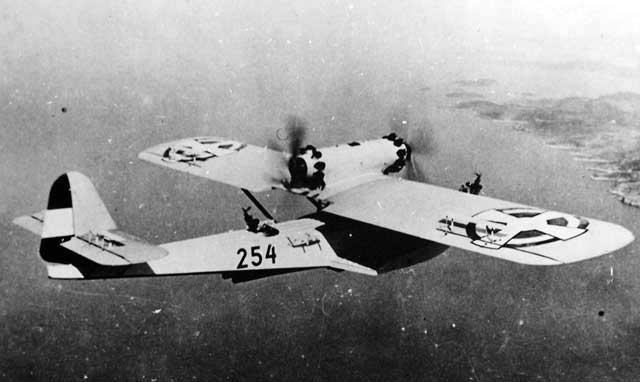
The technical details of the first Wal version were:
Engines: 2 Maybach Mb IVA engines of 260 hp each or Rolls Royce Eagle IX of 360 hp each. Other engines were also used.
Wing span: 22.5 m
Length: 17.25 m
Height: 5.2 m
Max. speed: 180 km/h
Service ceiling: ca. 3500 m
All-up weight: 5700 kg
Rohrbach Ro II
The Rohrbach Metall-Flugzeugbau GmbH was founded in Berlin in 1922 by Dr.-Ing. Adolf Rohrbach. Rohrbach had worked earlier as an aircraft and airship designer at the Zeppelin-Staaken works. His first design Ro-I was a twin-engine flying boat that was never built. However, his next design Ro-II was actually built and flown for the first time on 11 November 1923. Because it was not allowed to build bigger aircraft in Germany, it was built in Denmark. It was until 1926 that the conditions of the armistice were broadened to allow the construction of larger aircraft types in Germany. The Ro-II was an all-metal flying boat with the engine placed in two separate strutted nacelles on top of the wing centre section. Its single unbraced wing was of constant chord, making production easier. The constant chord wing would be characteristic for the most Rohrbach designs. The Ro-II was a 3-seat ocean patrol boat with, just like the Dornier Wal, a built-in sail rigging system in case an engine failure was encountered. The Ro II established a number of impressive world records for distance and speed and although it performed very well, it only served as a prototype for a further improved version, the Ro-III. Although Germany could not use it, the Ro-III was put in production and some numbers were supplied to the Turkish navy. The Ro III was also licence-manufactured by Mitsubishi in Japan. A further improved version, the Ro-IV was specially built for the British navy in close cooperation with the UK-based Beardmore aircraft company. Two were built; they received the serial numbers N 183 and N 184. Production of the Rohrbach flying boats ended with the single Ro V in 1927. This was the only type produced without the characteristic constant-chord wing!
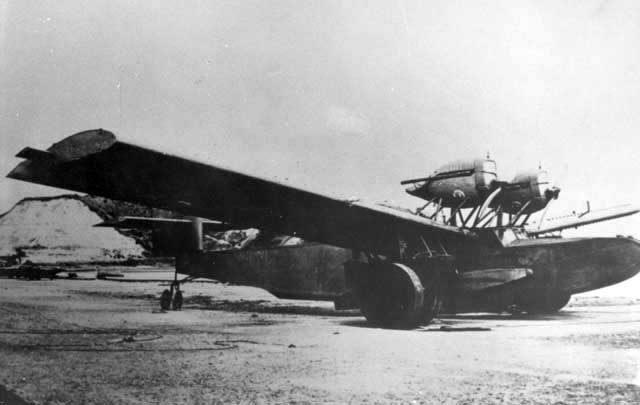
Technical details Ro-II:
Engines: 2 Rolls Royce Eagle IX engines of 360 hp each or Rolls Royce Eagle IX of 360 hp each.
Wing span: 27.00 m
Length: 16.50 m
Max. speed: 165 km/h
Service ceiling: 3000 m
All-up weight: 5700 kg
Dornier Superwal
After the success of the Wal, Dornier developed this type into an enlarged version with a capacity of up to 19 passengers. Fitted with two tandem-mounted engines of 650 or even 800 hp, and appropriately called the Superwal it made its first flight on 30 September 1926. In total three were built for the Deutsche Lufthansa.
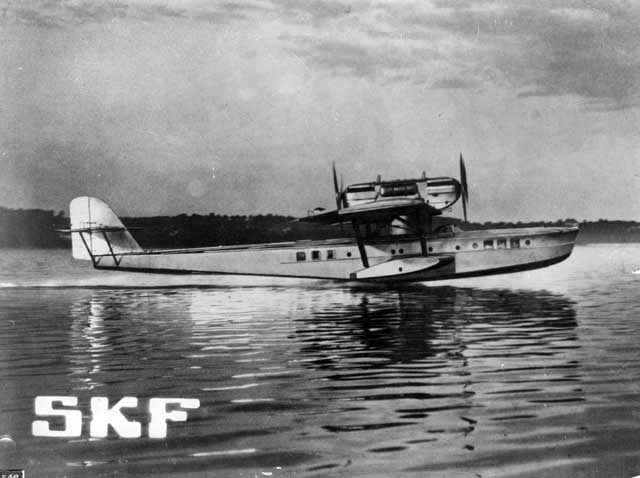
Dornier developed an even more powerful 4-engined version of the Superwal. With two tandem nacelles on top of a strengthened centre wing section it had much higher flight performances than the 2-engine Superwal. The first one, the Italian registered I-RIDE made in January/February 1928 a series or world record flights for speed and distance flown by Dornier chief test pilot Richard Wagner. The 4-engine Superwal was built with various types of engines. The 480 hp Gnome-Rhone Jupiter VI or the 525 hp Siemens Jupiter radial engines were used, but also the 460 hp Napier Lion in-line liquid-cooled engine and for two machines supplied to the U.S.A. even the 550 hp Pratt & Whitney Hornet was used.
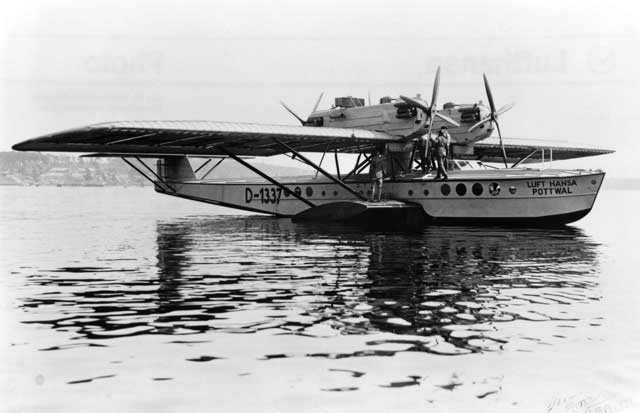
In total, the following 4-engine Superwals were built:
-six for the Italian airline company SANA
-seven for the Deutsche Lufthansa
-two for US costumers
Further one additional plane was supplied to CASA for local assembling in Spain.
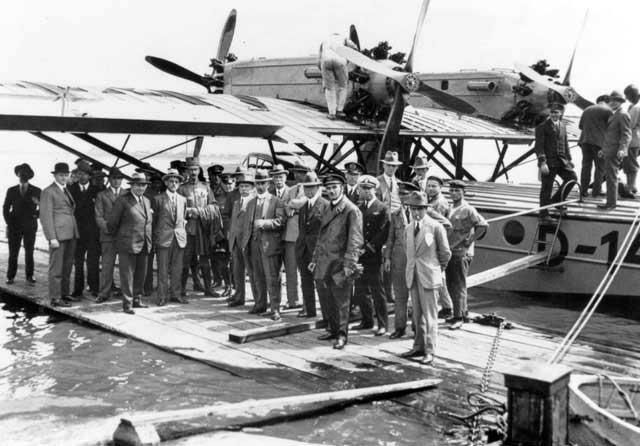
Technical details 4-engine Superwal:
Engines: 4 various powerplants with output of 460-550 hp
Wing span: 28.60 m
Length: 24.60 m
Height: 6.00 m
Max. speed: 210 km/h
Service ceiling: 2000 m
All-up weight: 14000 kg
Heinkel HD-15
Although Heinkel is more widely known for its series of floatplanes, this company also designed and built in 1927 a small three-seat flying boat, known as the HD-15. It was a biplane with the engine placed centrally under the parasol upper wing driving a two-bladed tractor propeller. It was made entirely of wood with an open cockpit for the pilot under the engine. In the rear of the hull there were two separate places for a passenger. The HD-15 was used late 1928 for catapult experiments on board of the ship ‘Bremen’. These trials were very important for later civil mail flights where a catapult ship was also used, but the HD-15 was not used operationally. Only one HD-15 was built, carrying the registration D-1237. However, for the Sowjet Union an improved version with a more powerful 600 hp Siemens radial engine and backwards folding wings was built in 1930 as the He-55. In total 40 were supplied to the Sowjet navy, where it was further indicated as the KR-1. A further characteristic of the KR-1 was that it could also operate from land during the winter using two snow skids mounted beneath the hull.
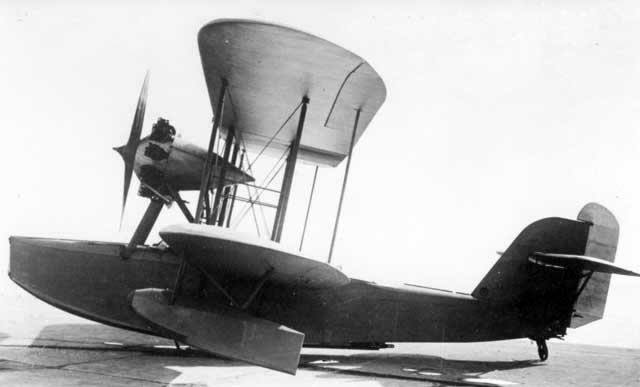
Technical details HD-15:
Engines: Gnome-Rhône Jupiter VI radial engine of 450 hp
Wing span: 12.40 m
Length: 10.70 m
Max. speed: 172 km/h
Service ceiling: 4300 m
All-up weight: 2350 kg
Heinkel He-57 Heron
The last flying boat from Heinkel, in fact being an amphibian, was the He-57 Heron. It was a small civil amphibian with a capacity of 4 passengers. The crew of two and the passengers were housed in a fully enclosed cabin. The wheels could be lifted partially when it was operated from the water. It had a single engine mounted in a central streamlined pod on top of the fuselage. It had an all-metal hull and a single strutted wing. Also the wing was made from metal with only the control surfaces covered with fabric. It was flown for the first time in 1929, but Heinkel failed to find customers and only one with civil registration D-2067 was built. It was finally sold for 12600 Mark to the Deutsche Verkehrsfliegerschule and used from List on the isle of Sylt.
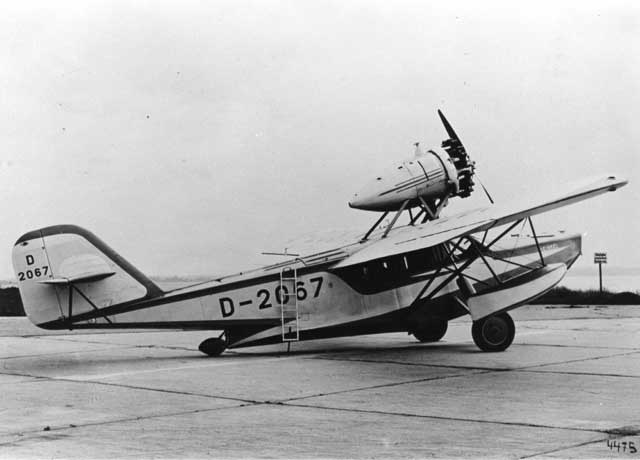
Technical details:
Engines: Pratt & Whitney Wasp radial engine of 400 hp
Wing span: 16.00 m
Length: 11.80 m
Max. speed: 180 km/h
Service ceiling: 3800 m
All-up weight: 2520 kg
Dornier Do-X
During a visit of Claudius Dornier in 1929 to the Reichsverbandes der Deutschen Luftfahrindustrie (the State Units of German Aviation Industry) he more or less received unlimited funds for construction of a giant flying boat. It was not specially intended to be a big commercial success and it was also not intended for mass production but most likely It was intended as a big propaganda ‘stunt’ to show what the German aviation industry was capable of! Under the designation Do-X Dornier presented a design using the most modern building techniques in combination with the lowest risks for technical failure. The result, as shown in the wooden 1:1 scale mock-up displayed in the airship hall at Friedrichshafen-Löwental, was a twelve-engine monoplane all-metal flying boat with the engines mounted in six separate tandem nacelles on top of the wing. For construction of the new giant flying boat, a special hall was built at the Altenrhein works on the bank of Lake Constance in Switzerland. The construction was completed in 1929 and the first flight took place on 12 July 1929 by Dornier chief test pilot Richard Wagner.

This first flight was at that time front-page news of all newspapers! The Do-X kept attracting the front page of the newspapers when it made on 21 October 1929 a flight with 169 people on board. During the flight testing it was discovered that the Jupiter radial engines had the tendency to overheat, especially the rear engines. To improve reliability on long-range flights they were replaces by more powerful Curtiss Conqueror liquid-cooled engines of 640 hp (giving more than 100 hp per engine extra than the Jupiter). Where the Jupiters were placed on the wing using streamlined pylons, just simple but sturdy streamlined struts were used for the Conquerors. In this form, the Do-X resumed its flight on 4 August 1930.
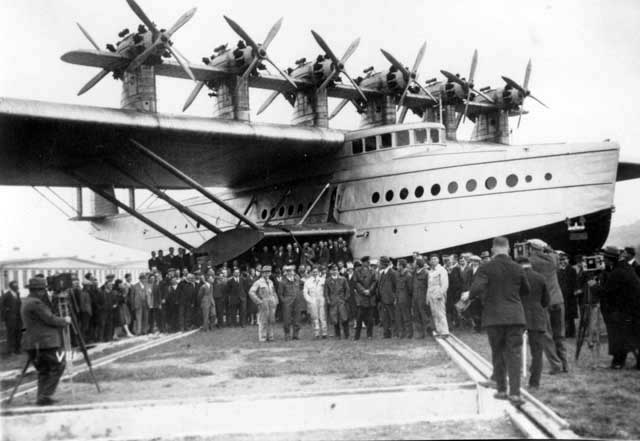
Next it was used for a large promotional tour covering Europe, the Atlantic Ocean and South and North America and back to Europe again. This tour was started on 5 November 1930 from Lake Constance to Amsterdam where the plane landed late in the afternoon just before sunset at Schellingwoude. From here it flew to the naval air base at Calshot on the south coast of England. Next, it flew to Lisbon but here the plane’s left wing was destroyed in a fire. It was repaired locally by Dornier technicians and it resumed its flight tour on 31 January 1931 to the Canary island Las Palmas. From here it made a further flight to the African coast and next a trans-pacific crossing to Rio de Janeiro where it arrived on 20 June 1931. From Brazil the Do-X continued its flight following the coast of the continent and later it crossed the Caribbean to Miami -Florida. It arrived here on 22 August 1931. Four days later it reached the harbour of New York. From here another trans-pacific crossing was made via the Azores to Portugal again and finally back to Berlin where it arrived on 24 May 1932. After another promotional tour in Germany in 1932 the Do-X was damaged after a hard landing on the Donau river near Passau. Instead of being repaired and made airworthy again, it was partly dismantled and transported to Berlin for permanent display in the Deutsches Museum. It was destroyed here during the last period of the war by an allied bombing raid.
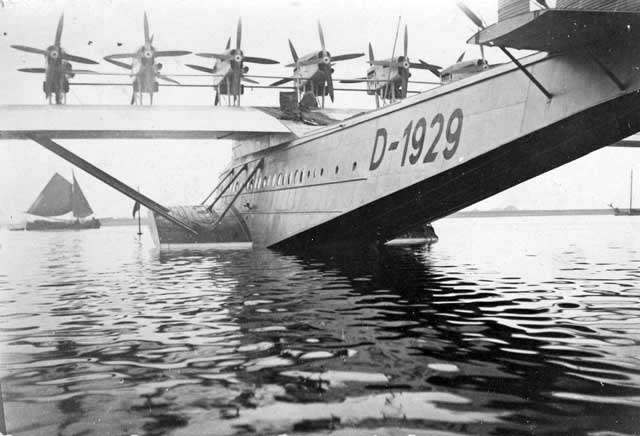
During the promotional world flight of the Do-X it raised much interest of the Italian government. Italy placed an order for two additional Do-X boats, known as Do-X2 and Do-X3. They only differed from the first one with their engines, for which the 610 hp Italian Fiat A.22R liquid-cooled engine was selected. The Do-X2 made its first flight from Altenrhein on 16 May 1931. On 28 August 1931 it was flown to Italy by a mixed German/Italian crew. The Do-X3 followed on 13 May 1932. Both planes were based at the Cadimare seaplane station near La Spezia where they were flown under the supervision of the Italian Air Ministry. After some demonstration flights in Italy, they were used for training and transport flights. They were withdrawn from flying status in 1935 and later scrapped. Do-X2 carried the civil registration I -REDI and was named ‘Umberto Madalana’ ; Do-X3 was registered as I-ABBN and carried the name ‘ Alessandro Guidoni’.
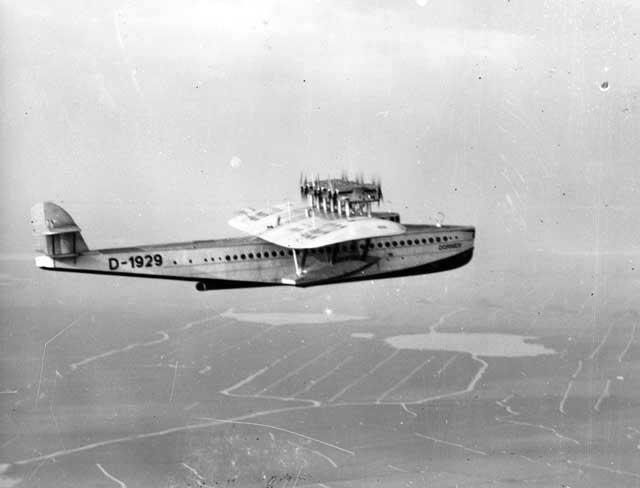
Technical details first Do-X:
Engines: 12 Siemens Jupiter radial engines of 525 hp each; later replaced by 12 Curtiss Conqueror liquid-cooled engines of 640 hp
Wing span: 48.00 m
Length: 40.10 m
Height: 10.10 m
Max. speed: 210 km/h
Service ceiling: 400 m in fully loaded condition.
All-up weight: 48 000 kg
Dornier Do-S
Initiated as a successor of the 4-engine Superwal and as a more realistic smaller version of the giant Do-X propaganda flying boat the Dornier Do-S was of all-metal construction with for engines placed in tandem nacelles on top of the high wing. Only the vertical fin, rudder and control surfaces were fabric covered. The hull was divided in two levels. The lower level was for the passengers. In total the Do-S had a capacity for up to 30 passengers. The flight deck for the crew of four was at the second level in the centre section of the hull. The pilot and co-pilot were stationed in an open cockpit. The board mechanic and navigator-wireless operator had a fully enclosed accommodation. The Do-S made its first flight on 23 September 1930. It was exhibited at the Paris air show in December 1930 and made an extensive promotional tour after the exhibition but in spite of its modern looks Dornier failed to find any customers and only one was built carrying the civil registration D-1967. The single Dornier S was finally delivered to the Verkehrsfliegerschule at List on the isle of Sylt, who also operated the single Heinkel He-57 Heron.
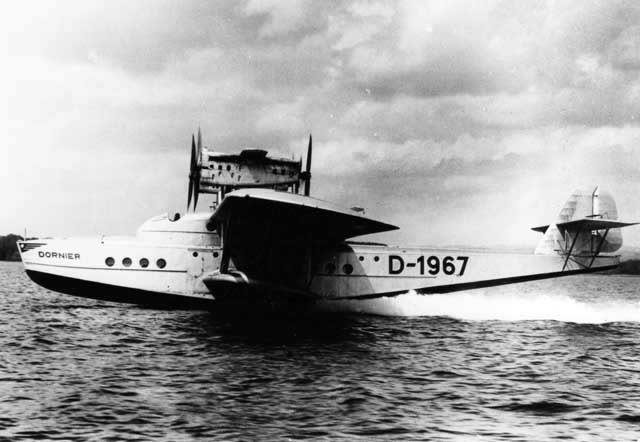
Technical details:
Engines: four Hispano-Suiza 12 Lbr liquid-cooled engines of 640 hp each
Wing span: 31.00 m
Length: 25.80 m
Height: 7.90 m
Max. speed: 205 km/h
Service ceiling: 2700 m
All-up weight: 16000 kg
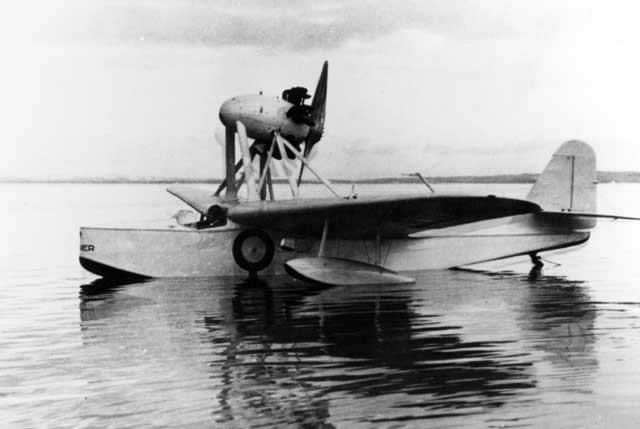
Dornier Do-12 (1932)
Based on the earlier Libelle light flying boat, Dornier designed in the early thirties a light amphibian fitted with an engine on a pod on top of the wing centre section. It had a single shoulder-mounted wing and construction was entirely of metal except for the covering of tail and control surfaces which were covered by fabric. Designated as Do-12 it made its first flight on 23 June 1932. Originally it was fitted with a 220 hp Argus As-10 in-line engine, but later this was replaces by a more powerful Gnome-Rhone Titan 5 Ke radial engine of 317 hp.
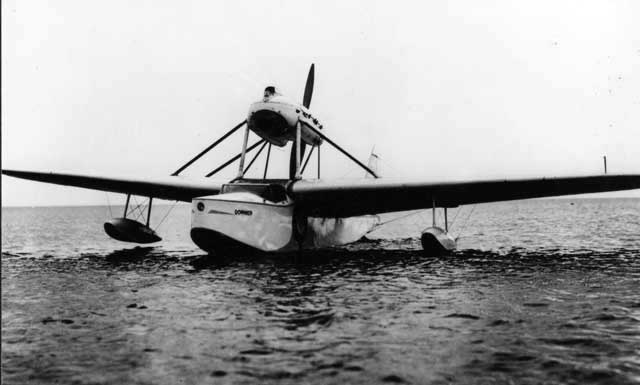
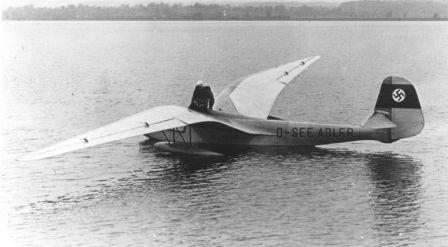
Only one Do-12 was built. In 1936 it was taken over by the MIVA (Missions-Verkehrs-Arbeitsgemeinschaft), a missionary institution where it was operated by the well know ‘flying priest’ Father Schulte under the name ‘Das fliegende Kreuz’ (the flying cross). Remarkable is the fact that MIVA made the Do-12 in November 1936 available for towing trials with the glider flying boat ‘Seeadler’ (sea-eagle). The Seeadler was flown by the famous German female pilot Hanna Reitsch.
Technical details:
Engine: Argus As-10 of 220 hp; later replaced by a Gnome-Rhone Titan 5 Ke of 317 hp
Wing span: 13.00 m
Length: 9.00 m
Height: 4.20 m
Max. speed: 210 km/h
Service ceiling: 51000 m
All-up weight: 1400 kg
Nico Braas
References:
-Anonymous, Dornier-Die Chronik des ältesten deutschen Flugzeugwerks. Aviatik Verlag/Dornier GmbH 1985
-Fred Gütschow, Die deutschen Flugboote, Motorbuch Verlag 1978
-Peter Pletschacher, Grossflugschiff Dornier Do-X, Aviatik Verlag 1997
-Claudius Dornier; Erich Tilgenkamp, Do X Das größte Flugschiff der Welt, Orell Füssli Verlag 1931
-P.St. John Turner, Heinkel-An aircraft album, Ian Allan, UK 1970
-Hugo Hooftman, Van Farman tot Neptune, La Rivière & Voorhoeven, the Netherlands 1964
-Michiel van der Mey, Dornier Wal vliegboot, Van der Mey Books, Hilversum/Kleve 1986
-David Oliver, Wings over water, Greenwich Editions, UK 2003
Photo credit: Nico Braas, Dornier, Srecko Bradic
(With special thanks to mr. Bob de Nies)

Great site! Wonderful work!
I’ve recommended it on our WW1-forum:
http://www.forumeerstewereldoorlog.nl/viewtopic.php?t=14909
I found your blog via Google while searching for miami boat building and your post regarding n flying boats Part 1: 1914-1935 looks very interesting to me. I could not believe the amount of quality material on this site. The site is extremely eyecatching and pulls the reader straight it, the articles are great quality and are very professionally written. I have seen too many of these sites where it looks like they pay an 8 year old to do the writing – Not this one. Your site is easily the best that I have seen in a long while.
Founed a picture of a German flyingboat on waterairport Schellingwoude in 1931
The plane is registererd as D-1767 rogen lufthansansa
I want to kwon wat plane it can be i think it a Dornier but wat type
The picture is published in Zeeburg geschiednis van de Indische Buurt en het Oostelijk Havengebied by Ton Heijdra uitgeverij Rene Milliano
The origanial pictuere is avalibele by the Gemene Archief Amsterdam
Hope you can give me information about this plane
Met vriendelijke groet Jos Dormans
Best way is to send preview of the image. I will contact you in private and forward you to the author of this article, Nico Braas.
Well done !
Why aren’t we friends !
Hello, I am researching the Dornier DOX-1929. I need more information about the actual crew members. One in particular, Emil Fischer, he was the crew chief on that flight and my grandfather. If you have any more information please let me know.
Thank you.
Dear Sir, I’m trying to locate information on the 1929 Superwal that the American industrialist Gar Wood purchased. Any information would be appreciated. Thankyou, Gene
Hello Gigi,
I work at the Dornier Museum in Friedrichshafen, Germany – feel free to reach out to us at the archive! We have a larger number of books dedicated to the Do X, these include info on the crew and flights. I have recently received some materials from Emil Fischer’s ancestors which is why I found your message on this forum.
Best, Bettina Poenisch
I have been collecting information on (long distance) flying boats of the period between the Wars for some time.
If you want, I can send you additional info on Rohrbach boats to complement your very professional collection.
I have ‘printed’ an article on Rohrbach for private use, complete with references and bibliography.
If you send me your mail address I will forward it free of charge and free of copyright.
Rit Staalman
i would like you to send the info to me gigi perez is my aunt and i am to looking for info on emil fischer he was my great-grandfather, my e-mail is bryanssamantha@yahoo.com. thank you
Just came across this article.
I happen to own a post card of D-1929 at Müggelsee.
It is signed by Emil Fischer.
Will provide pics if desrired.
I would love to see any pics. Emil was my grandfather. Thank you so much.