
Dornier Do17K history
Do17K was export version of Do17 for Royal Yugoslavia. As the Do17K being close resemblance of the Do17E and M type, it mainly differ in several major features and was more capable combat platform. Do17Ka-1 and Ka-2 was derivates of Do17E/F and featured fabric covered wing lower surface and short distance among the engines. Do17Kb from Dornier and Yugoslav had all metal wing covering and some longer engine mountings.
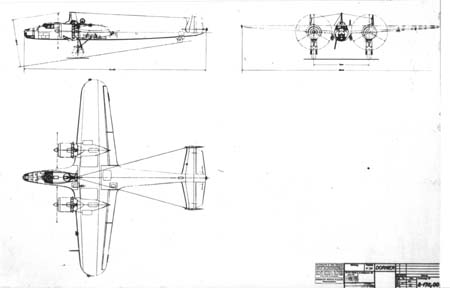 Yugoslavia had in its service version K. Externally it could be recognized by its specific long nose, firstly used on V8 prototype and French double row radials. It was designed from two different versions of German origins, E and M. Model E had a partially fabric covered wings and M had completely metal covered wings. Initially K should present reengined resemblance of Do17E-1 with long nose but this was later changed and Yugoslav type featured more differences and many new innovations, later applied to the newest version of German Do17 planes. Yugoslav model of Do17 had increase in all aspects such as top speed, bomb load, range and firepower. In regards to the German models which were pure bombers, K version could be specified as a strike bomber.
First contact of the German and Yugoslav official’s about delivery of combat planes held in Alterheim in Switzerland, in September 1935. Two months later, Yugoslav commission had tested one of the first prototype of Do17, powered with BMW engines. Yugoslav officials held a negotiation with Dornier of the delivery of Do17 and Do22 in total amount of 2.000.000 RM but Herman Goring had influence as his opinion was that solutions was too good for Yugoslavs. But information that Yugoslav could got credit for military planes from France disturbed German side and after continued negotiation contract was sighed at November 1936. for delivery of twenty Do17. By the proposal, first plane should be ready and delivered at May 9. 1937. Yugoslav sent a commission whose task was to accept new produced planes. Regarding to their reports, by the end of August 1937. no one planes were in stage of final assembly as well proposal state first to be delivered in May. Command of the Yugoslav Aviation did not want to ask for penalty as well that could make administrative troubles. Yugoslav officials also refuse German offer to equip planes with armament and aiming devices. In the meantime a group of Yugoslav workers and technicians came into Dornier for manufacture training.
 Maiden flight of the leading plane was at 6. October 1937 and first sample were deliver at October 25. 1937. The rest of the planes were delivering in the first months of 1938. During the delivery one plane, No.17 was lost and it was later replaced with the other one. At March 12. 1938 was signed new contract of delivery 14 new planes of the type and two of new model.
Total Yugoslavia pay 7.139.995 RM for delivery of 36 Do17K from Germany. Also was made contract for license production of the plane in Yugoslavia and more 1.829.825 RM was pay for spare parts and materials. From the report dated on February 6. 1939 could be noted that only ten planes from second contract was ferry to Yugoslavia and rest was in final stage of assembly or flight tests.
In total Germans were delivered 20 Do17Ka-1, fourteen Do17Ka-2 and two Do17Kb. During the delivery of Do17Ka-1 one plane was destroyed and in further purchase was replaced with new one, probably Ka-2 model. This gave a total number of 37 samples built in Germany. Royal Yugoslavia overtaken license production of Kb models in plant in Kraljevo. First production block had sixteen planes which had the original French powerplants. Second and third production block had license produced Gnome Rhone 14K engines. All DFA ( Drzavna Fabrika Aviona- State Aircraft Factory) built Do17Kb had a built-in windshield FN machine gun’s. As a offensive armament first and third block had a internally eight bomb “Stankovic” cal. 106 kg and externally on two racks, two 200 kg bombs could be carried. Similar bomb equipment had all German built planes. Second DFA production block had possibly two type of bomb armament. Mainly that block had two containers UD 32 with total of 64 bomb’s cal. 10 kg. This was later converted to carry one more container with total of 96 small bombs. But there is a information’s of the samples with twelve bombs 90 kg each.
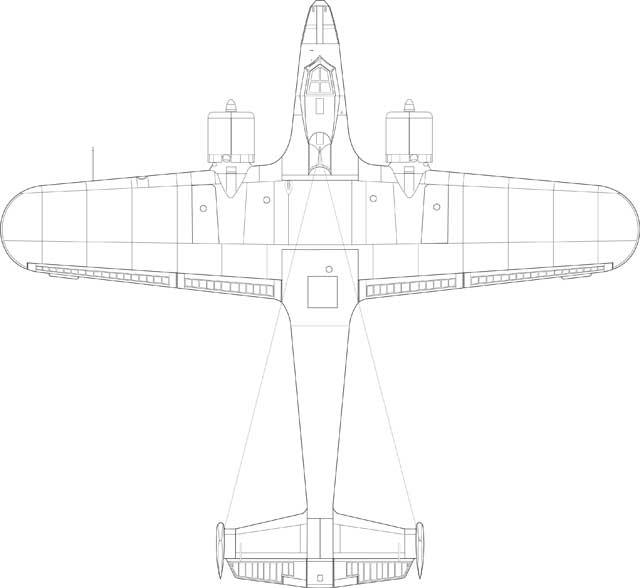
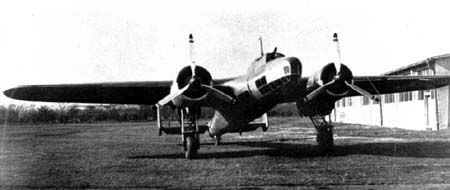 Do17K was medium day and night bomber and recognize with crew of three men. Construction was all metal with shoulder wing and twin verticals. Wings had a rounded tips and 18 m in span. It consisted of two main spar and frames. Fuel and oil tank was housed in the inner side of the wing. Two engines were also positioned on wing with nacelle. Inside of the nacelle was retractable landing gear. Two types of wings were used on Do17K. One models used on Ka and it had partially fabric covered lower side and engine was placed on 5 m distance. On Kb models wing was all metal, with heated leading edge and engines was more separated 5, 42 m. Ka also used slotted type of flaps. After reintroducing of long nacelle, Kb wings had flaps spited into four parts. Fuselage was of monocoque all metal construction and total length was 16, 48 m. On the front was unglazed nose and two types were used, with more or less transparent panels. Behind the nose was pilot’s cockpit with place for two men, pilot and observer. Canopy was of two styles, symmetrical from German delivery and asymmetrical manufactured in DFA. In the back side of the cockpit was gunner compartment and boards with various devices and panels. Bomb bay was in the center section of the plane just behind the gunner place. In front and the behind of the bomb bay was entry doors, on port side only. Auxiliary fuel tank was in the fuselage aft of the bomb bay. Several of equipment was placed in fuselage. Radio equipment includes FuG III Telefunken 274 af radio station, directional finder Telefunken 128 H and compass P63 uN. Fire exguisher and battery was in gunner compartment. Nine air inhalator bottles was placed in the aft fuselage on Ka models and on Kb it might to be 15. All was Drager type and 2 l each. Powerplant consisted of two radial fourteen cylinder double row Gnome Rhone engines.
Power on take of was 770 HP and 850 HP at 3850 m height. Engines had one clock and the other clockwise rotation. Total weight of both engines was 1900 kg but recce version weighted 1940 kg. Propellers were three blades metal constant speed VDM, 3, 3 m in diameter. Engines used 87 octane fuel and total of 1880 l could be carried. Armament differs from production blocks. All of the planes delivered from Dornier had defense armament consisted of two Darne 7, 7 mm machine guns and two of the same type fixed in nose for attack. Yugoslav built samples had all FN machine guns. First block DFA had four 7, 9 mm cal of them but later block had in the cockpit 13, 1 mm cal gun. Many of statements direct that 20 mm cannon were installed in nose of some DFA produced planes. Offensive load on Dornier planes could be carried on two internal Maga 4/85 bomb racks and external P.V. 125 racks. Total of eight internal bombs could be carried. There was Stankovic cal. 106 used. On the external pylons could be load 106 or 200 kg bombs. That was identical bomb load for first block from DFA but later was introduced two cluster racks UD 32 with 32 bombs cal 12 kg. Later that was converted to carry more bombs. Also was version with twelve 90 bombs. In recce missions bombs are not to be used and one 55 kg camera was placed in the nose.
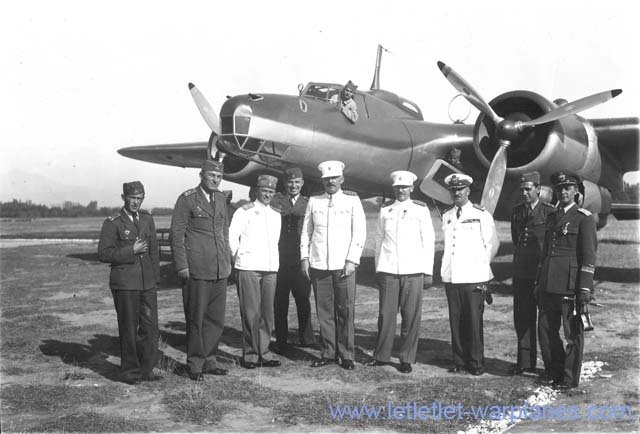
Sole Yugoslav operator of the type was 3. vazduhoplovni puk ( air regiment) with staff headquarter in Skoplje, South Serbia. This unit foresees aggressor role with targets in Bulgaria and possibly Albania. Unit was highly trained and only two planes were lost before the war. There war also few of air accidents but all damages were repaired. Three samples were in Combat weapon school in Mostar.
Yugoslavia enters Second World War on April 6. 1941 when Axis power attacked them. Do17K led an massive attack on Bulgaria (Sofia and airfields around) and a number of group attack on German armored units with highly destructive effects. After of brilliant activities Do17K find new operators after the fall of Yugoslavia. Two samples were used by RAF in Africa. Hungary had one sample used as a fast reconnaissance plane until 1944. Bulgarians handed from Skoplje six damaged planes while new established Croatian state took eleven samples. Second World War survived no less then nine planes but all of them were scraped until fifties.
Dornier Do17K in its several versions was almost all of them served in 3. bomber regiment while one was in training squadron and two were in combat weapon school in Mostar. First were arrived in 1937. and became operational in 1939.




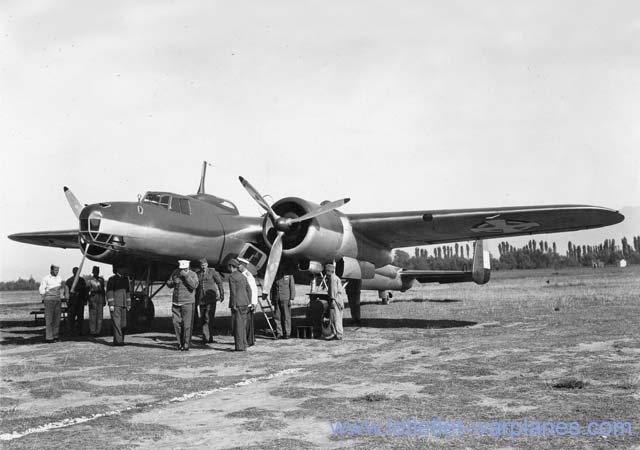

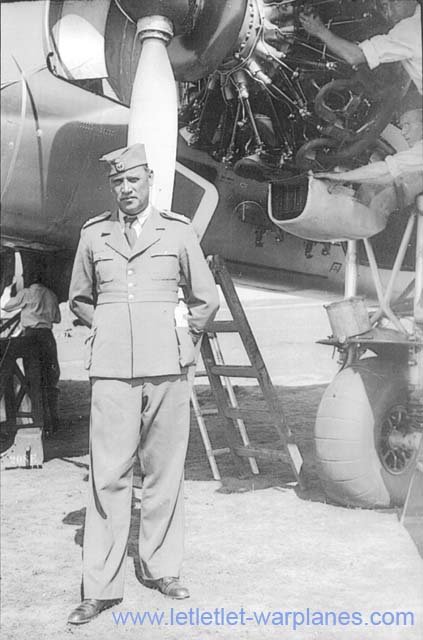


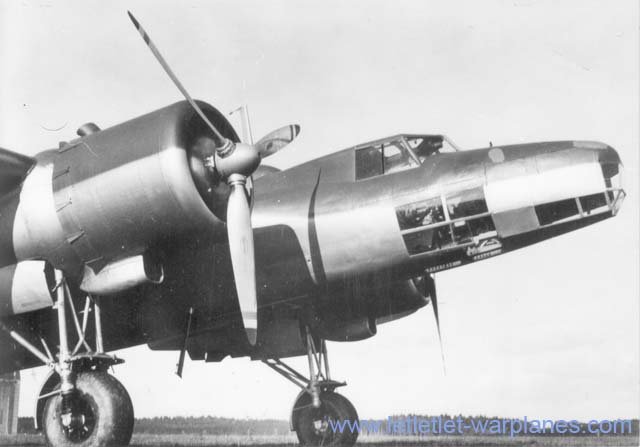

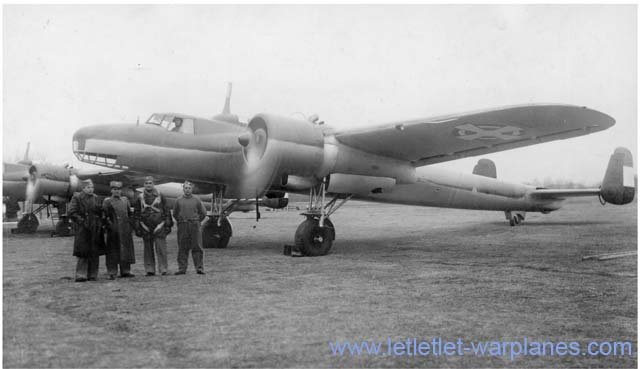
Do17K were produced by Dornier and DFA and top surface of both had three color patterns of German export colors. Germans and first two blocks from DFA were silver on the underside while the last block from DFA featured grey underside . In total four camouflage pattern were used. Peacetime insignia were applied on all German purchase but DFA released only first block in this livery. On the fuselage were applied triangles and circles in red or light blue color, regarding to the units but that practice was not referred to the domestic built Do17K. First block delivered from DFA had wing insignia in four positions, second block had reduced visibility with one insignia on the bottom of the port wing and the other smaller on the top of the starboard wing. Final produced block had one larger insignia had on the bottom of the starboard wing and one smaller on the top of the port wing. Last two block was delivered with narrow flag on the rudder. National insignia was outlined in mid blue color.
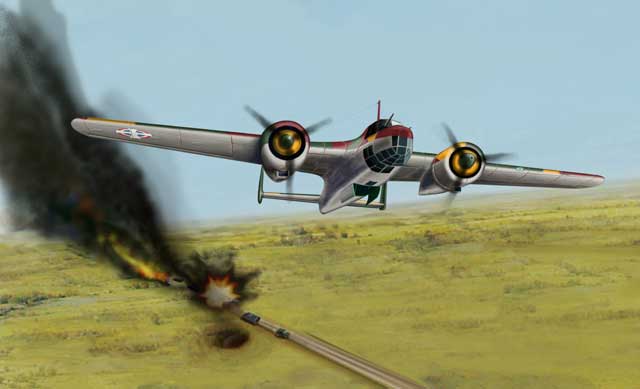
At all 73 Do17K were made, 37 in Dornier plant and 36 in Yugoslavia. In DFA plants was finished and purchased 33 samples and last three was finished in “Ikarus” in Belgrade and delivered to Croatia so late in 1943.
Srecko Bradic
Photo credit- Dornier Archiv, Petar Bosnic, Srecko Bradic, family Mijuskovic, Tadeush Dobroviecky, family Burzan
Note– author have publish more material in the book “Kraljevski avioni” [Kraljevo 1995], magazine Avions [France 1997, issues 54, 55 and 56] and magazine SAFO [USA 2000, reprinted issue from April 2000]. There could be found more images, drawings as well color profiles.
Excellent article and fotos ! 🙂
Danke Wingman81 🙂 😉
Great article, very useful information.
Никогда не думали по поводу размещения рекламы на вашем блоге? Баннер в шапке, как вариант? Еще довольно распространены пожертвования…
very interesting site