Curtiss Shrike
From my point of view, Curtiss Shrike have prominent place in aviation history and somehow can be also milestone in aviation development. Apart from it first operational machine with flaps included, the same design was not specially advanced but what make it special is that on this machine was first time was practiced extra low flying or contour flying which will have great use in WW2 and today can not be imagine attack plane mission without flying on very low level.
Development
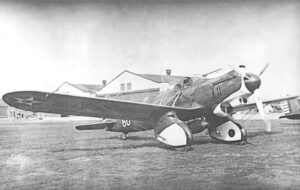
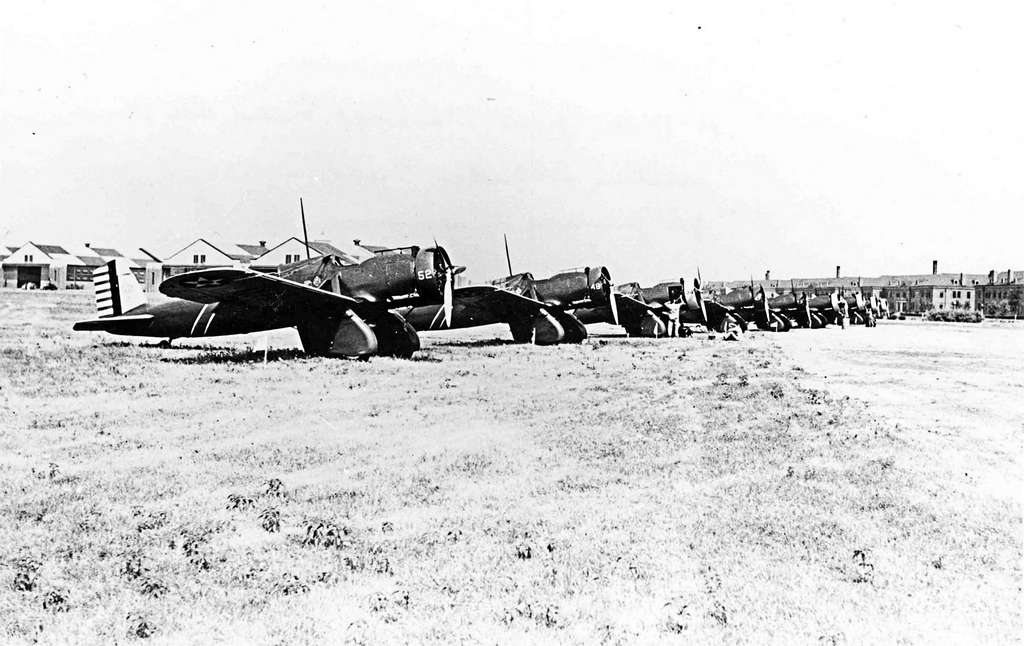
Curtiss XA-8 was designed to an Army request for all metal low wing attack monoplane and first flew in 1931. Its direct competitor was the General Aviation/Fokker XA-7. Fuselage was the new smooth semi monocoque while the conventional two spar wings were covered with aluminum sheet and braced with wires and introduced an innovation to Army aircraft- trailing edge flaps. Forward firing armament was four .30 inch machine guns in the landing gear fairings while the rear gunner had a singled flexible .30 inch. Four 100 lbs or ten 30 lbs bombs could be carried under the wings. The XA-8, 30-387, was delivered to Wright Field, Ohio for initial flight test in June 1931. From the December 1931 this machine was on three months flaps testing’s and two months on rear cockpit revisions. It was handed later to 3rd Attack Group at Fort Crockett. In the November 1937 this machine was still active and with 878 flying hours.
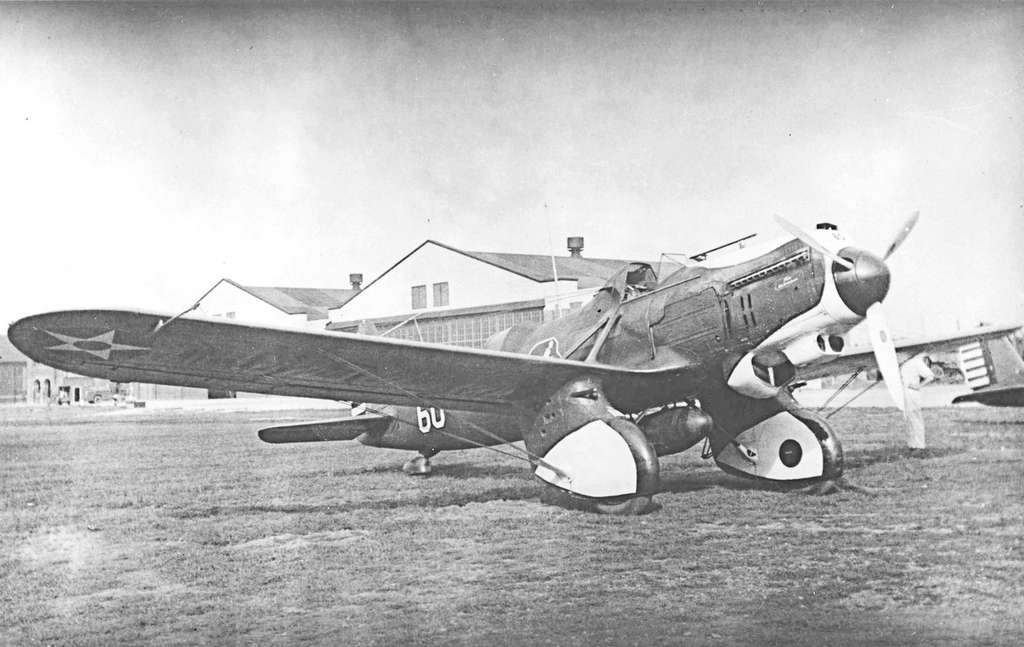
Followings testing’s of the prototype, five service test YA-8 and eight Y1A-8, were ordered, powered by Prestone cooled Curtiss Conqueror engines, in 600 HP V-1570-31 and 675 HP V-1570-57 versions respectively. The Y1A-8s (32-356) was the last Y1A-8 with revised cooling system and a 675 HP Conqueror while the YA-10 (32-344) was the first YA-8 airframe with a 625 HP Pratt & Whitney R-1620-9 Hornet engine. In September 1932 the XYA-10 were located at Wright Field and for the testing was send to Ft Crockett at 6th December 1932. On 5th March 1934 plane were assigned to the Central Zone of the air mail service and was return to Ft Crockett on 13th April. This XYA-10 joined A-8 at Barksdale at July 1934. Based on its improved performance, it was produced A-12. The radial engine installation proven superior to the liquid cooled, so the 46 production A-12s which concluded the Shrine series used 690 HP Wright R-1820-21 Cyclones. Major structural change from A-8/10 configuration was relocation of the rear gunner to a position just behind the pilot.
Construction
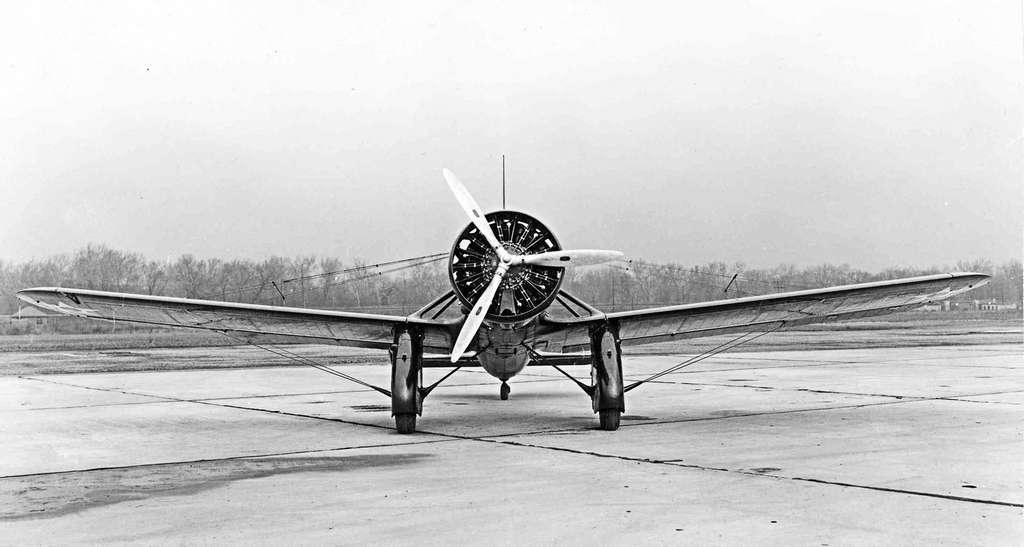
Shrike was all metal attack airplane with a crew of two. Fuselage consists of front and rear section. Front started just ahead of observer position and it was made of welded steel tubular construction with two struts connect with wings. Rear section was of monocoque construction with smooth metal skin. This sections was connected by longerons of U shape, telescoping into each other and secured with bolts on four points. As separate section on front fuselage was attached engine.
Wings were attached to the fuselage wing stub by front and rear hinge pins. They are additionally braced by wired attached to the rear and front top surface of wing and secured on pyramid placed on the top of the fuselage, behind pilot. Wings were equipped with automatic slats, mounted on roll bearings. Flaps are operated by pilot and they could go down up to 35 degree. Entire wings is of metal construction and plating only ailerons were fabric covered.
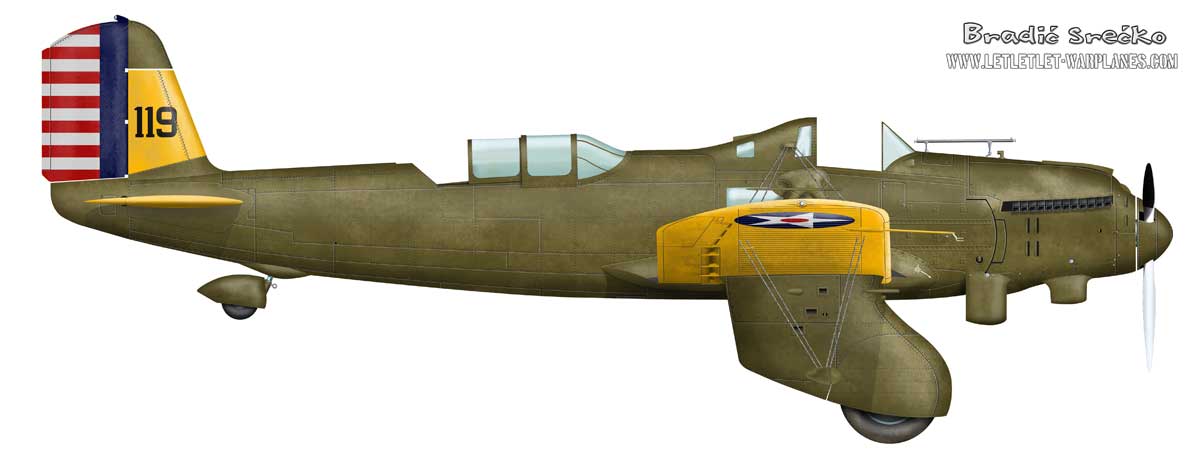
At the wing bottom was attached fixed landing gear, attached by bolts on front and rear spar of the wings. They are streamline covered with 31 inch wheels inside. Main armament was mounted in the landing gear. Shrike had four .30 cal Browning machine guns in this position, two 1918 M-1 was in starboard side and two M-2 was in port side. Each gun was supplied by a detachable stainless steel ammunition box of 600 rounds capacity.
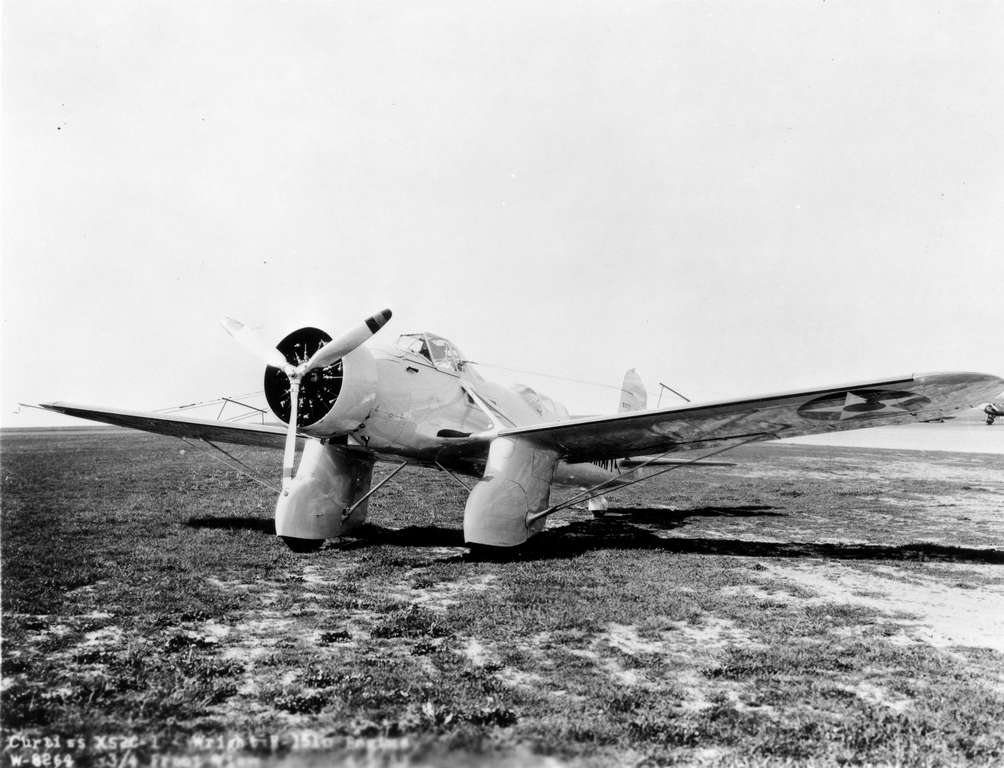
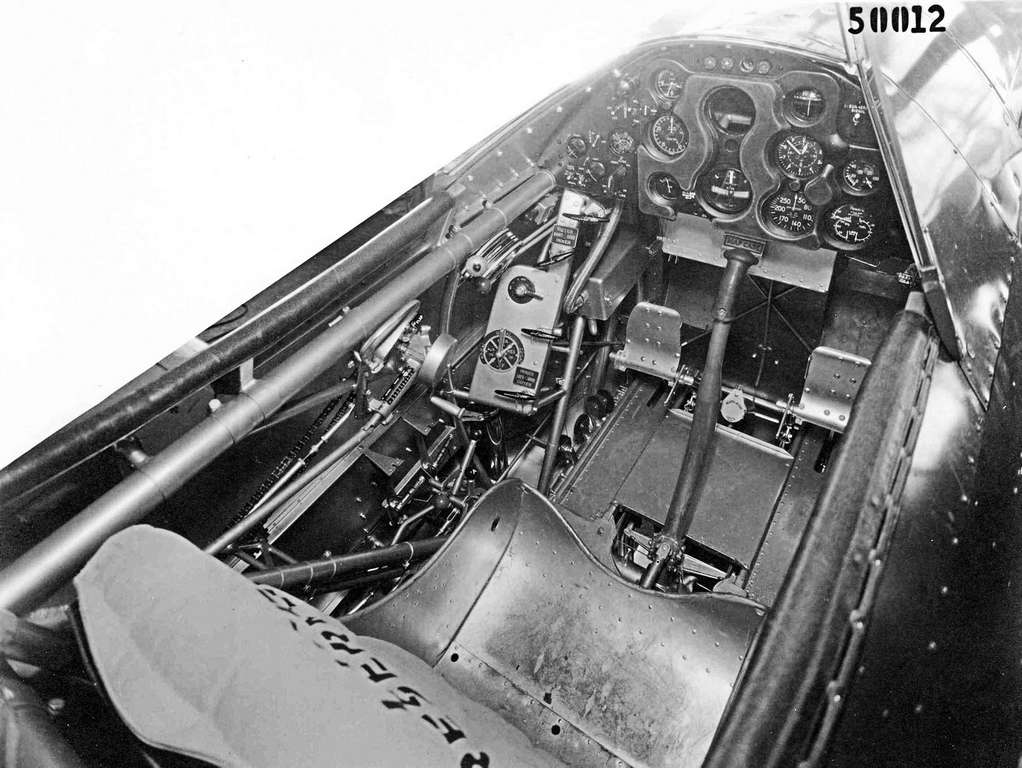
Ahead of pilot windshield was mounted C-4 gun sight and was possible to position it for left or right eye sighting. Observer was provided with flexible single 1918 .30 M-1 Browning machine gun and inside observer cockpit was five ammunition boxes, each with 100 rounds.
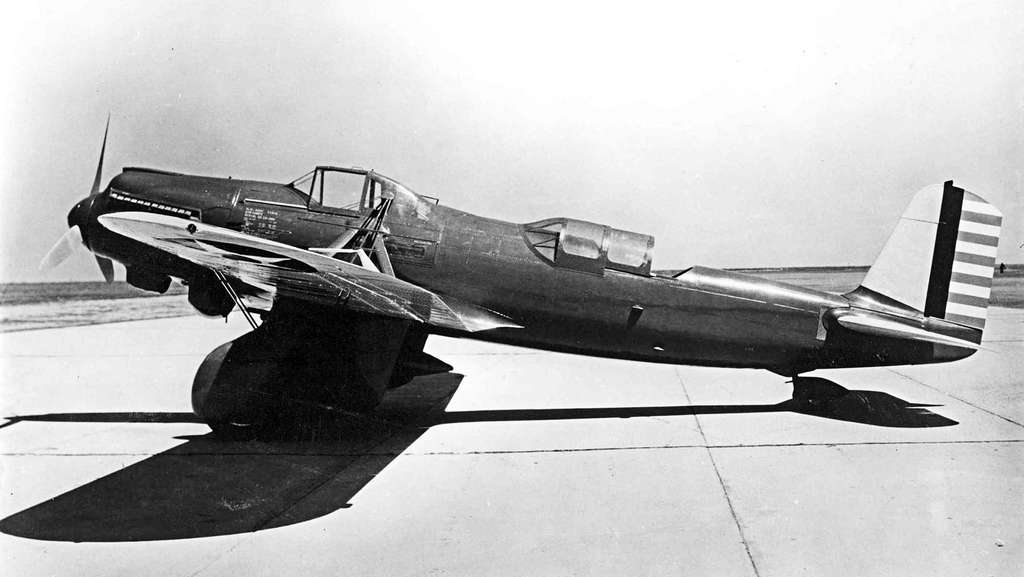
For attack, Shrike was equipped to carry ten 30 pounds bombs internally on pair of N-2 bomb racks. Bombs were carried in vertical position. There was option for external P-1 rack and with capability of four 100 pounds demolition bombs or four 50 ponds chemical bombs. Option was also to place there smoke tank for laying smoke curtains. For extra range, on external rack could be also mounted 52 gallon auxiliary tank. It could be jettisoned as well main internal fuel tank.
Specification of A-12
Powerplant was one 670HP Wright R-1820-21 air cooled radial engine.
Maximum speed 177 mph at sea level, cruising speed 151 mph at sea level. Stalling speed 67 mph. Initial rate of climb 1170 feet per minute. Top ceiling 15150 feet. Range 450 miles
Wingspan 44 feet, length 32 feet 3 inches, height 9 feet 4 inches, wing area 284,5 square feet.
Weights, 3898 pounds empty, 5736 pounds loaded.
Unit deployment
The Shrike family served with various USAAC units between 1932 and 1942. During the testing’s at Fort Crockett, A-8 were in standard camouflage of Olive Drab fuselage and landing gear cowling and yellow wings and tail. Service was began in July 1932 when four YA-8s and six Y1A-8s were assigned to the 3rd Attack Group for testing and were divided between the Group’s three squadrons- the 13th, 8th and 90th. After A-12 has been issued to these units, the A-8s were transferred to Barksdale Field and then in 1935 they were assigned to the 37th Attack Squadron of the 8th Pursuit Group at Langley Field. While at Langley, four A-8 were washed out and the five remaining machines left Langley during September 1936, two going to Chanute Field and three to Command and General Staff College at Forth Leavenworth.
The surviving A-8s were withdrawn from operational use in 1936 and by December 1938 only two remained airworthy. All A-8 type planes with the 3rd were transferred to Barksdale Field, Louisiana during July 1934 and the 3rd Group equipped with A-12 Shrikes between December 1933 and February 1934. During the service at Ft Crockett and Barksdale, three Shrikes were wrecked. That was machine 32-354, damaged beyond repair on 15th May 1933 at Bowman Field, Kentucky; 32-351, damaged beyond repair in January 1934 at Ft Crockett; and 32-352 which caught fire in the air near Redwater, La. on 18th October 1934 and was surveyed in December.
Table bellow present A-8 during the active service.
|
Station assignment |
Dec ‘32 |
Dec ‘33 |
Dec ‘34 |
Dec ‘35 |
Dec ‘36 |
Dec ‘37 |
Dec ‘38 |
|
Aberdeen |
1 |
1 |
|||||
|
Edgewood |
1 |
||||||
|
Wright |
1 |
||||||
|
Depot |
1 |
2 |
|||||
|
Ft Crockett |
10 |
11 |
|||||
|
Barksdale |
9 |
||||||
|
Langley |
8 |
||||||
|
Lavenworth |
1 |
1 |
|||||
|
Chanute |
2 |
4 |
1 |
||||
|
Total |
12 |
11 |
10 |
9 |
5 |
5 |
2 |
During 1933, many Shrikes took part in the test of the experimental camouflage, paints was water soluble and applied over original painting. Paints used for this test was Olive Green, Dark Green, Mauve and Light Blue at bottom.
Air mail service
The A-12s, meanwhile, began to reach the 3rd Attack Group in December 1933. When the USAAC took over responsibility for flying the air mails in the US in February 1934, the 41 A-12 attached to the 3rd Attack Group were all assigned to this task for three months. In February 1934, the US government cancelled all airmail contract with private operators and handed responsibility of airmail delivery to the Air Corps. Air Corps divide country into three zone, Western, Central and East and assign best crew and airplanes for that duty. For the Central zone was assigned 41 Shrike’s A-12, six was assigned to West zone and additional two machines from Aberdeen and Edgewood. A-12 did have some modification of the rear cockpit for the mail cargo. In May 1934 was cancelled contract with Air Corps and new contract were made with domestic operators. Two airplanes were lost during airmail service. Later the same year, the 3rd commanding officer, Lt. Col. Horace W. Hickam was killed while flying an A-12; subsequently, Hickam Field in Hawaii was named after him.
Memories of Killer Kane
Leader of the low level attack of the B-24 Liberator on Ploesti was Colonel John R. ‘Killer’ Kane and he received Congressional Medal of Honor for this mission. Low level practice he achieved as young Lieutenant while flying on A-12 Shrike from 3rd Attack Group. Kane remembers:
‘When I joined the 3rd Attack Group in 1935 we flew Curtiss A-12s. It flew like no other plane. In a step bank the leading edge slots popped in and out and in landings the plane popped eyes of new pilots, for when the throttle was cut the plane dropped like a brick. It was good in formation, however and had good visibility.’
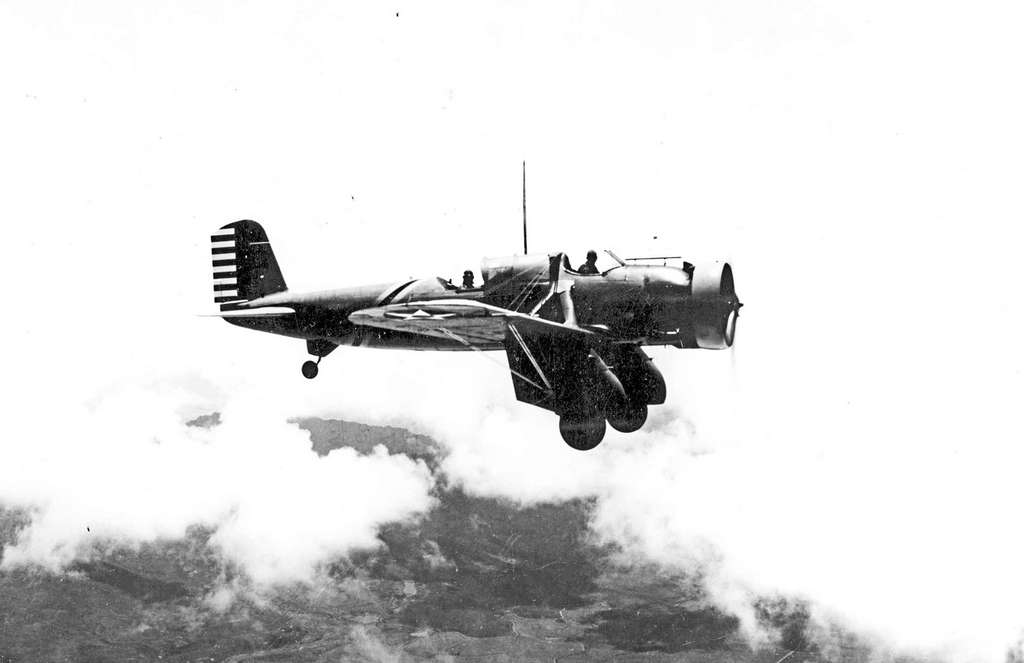
‘In attack flying the formation make flat turns, that is- a line through propeller hubs remained parallel to the horizon. This required long practice and strict flying discipline. The wingmen flew on the element leader and stayed with him even if he cracked up. If there was a crash, there should be three wrecks! Night flying in formation was really a nerve jerker.
‘The group or parts of it were always doing demonstrations around the country, trying to convince the Army and the public of the value of air power. One year we went as a group to the Miami Air Races and daily put on a show of formation flying without getting out of the area of the airport. On the way to Fort Pierce, where we camped, my element leader went to sleep. We two wingmen flew with him and by changing the airflow over his wings kept him in fairly good formation. Finally the Squadron leader made a turn and we had to jazz our engines to wake him up.’
‘Major Paul S. Williams (Squadron Commander of the 90th Squadron to which Lt. Kane was assigned) was to us old man, but from the way he flew he made our flying seem conservative. Every time we went to the Texas coastal area he really cut loose so that all the woman ran for their clotheslines when they heard our planes. I still don’t know whether or not he knew what a telephone line looked like or whether he even saw one but he headed his plane at a point midway between the posts and those of us with clear space followed him. Most elements leaders went over (the telephone lines) with hardly a perceptible change on formation flying from the Major. I suppose I flew under many lines, but I never saw them- just the element leader. With your eyes grooved into a fixed angle with his head, and a responsive left hand on the throttle, there was no time for sight seeing.’
Hawaii
In 1936, 15 A-12 from the 3rd Group were sent to Hawaii and additionally six were joined in 1937. They equipped 26th Attack Squadron stationed at Wheeler Field. In general more then 20 A-12 were transferred to Hawaii in 1936/37 to serve with the 26th Attack Squadron. Their camouflage was blue fuselage and yellow wings and tail and had three digit numbers. From January 1939 they start use new designation AR, derived from A (attack) and R which denote 18th Composite Group. Patrol of Shrikes o Hawaii was boring so to make formation flying more interesting, they introduce practice that pilot could not land if his airplane wing tip was not signed. The pilot dipped one wing down so that the observer in airplane under sign his name on wing tip. And that was repeated until each plane had signature.
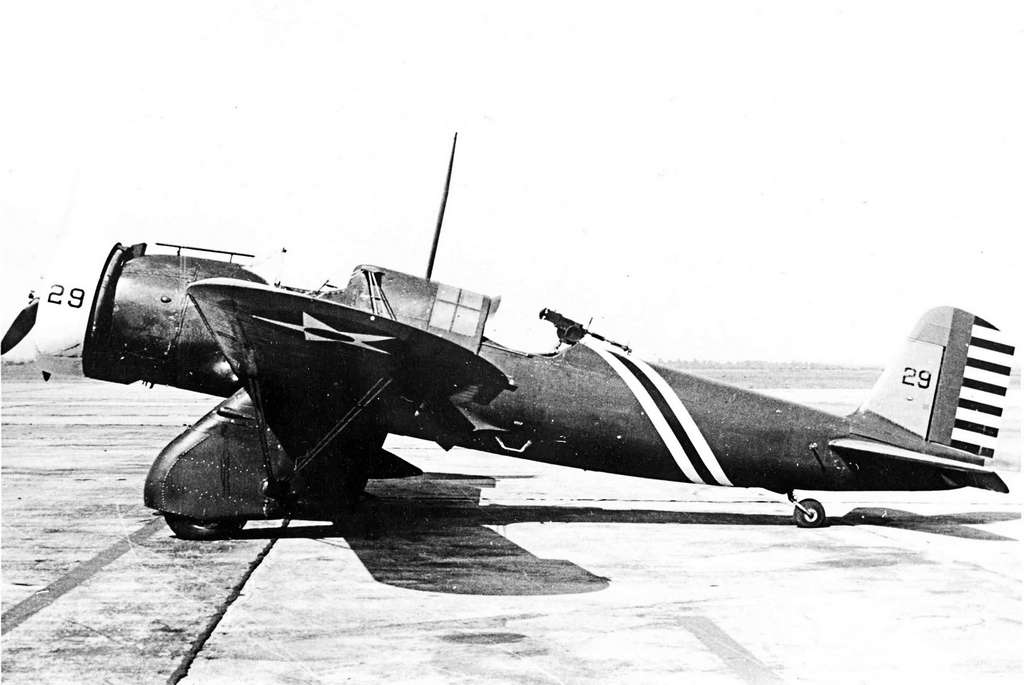
Nine of this machines was still at Hawaii, at Hickam Fields, when the Island was attacked by Japanese force at 7th December 1941. Eight of this machines were returned to the United States were they was used as instructional airframe.
China
Sole foreigner operator of Shrike was China. In 1936 ten A-12 was sold to China and they were shipped there by sea. After assembly at Hangchow, they were presented there and in Nanking and after positive impressions, additional ten machines were ordered. This Export Shrike main difference is in stronger engine, Wright SF-1820F-52. Luke Williamson, former Air Corps pilot, was instructor to the Chinese pilots. This Shrikes did not last long in combat.
It is not known that any Shrike is preserved today.
Srećko Bradić